Out past the postcard views sits an unpolished slice of the Maldives. Not a single infinity pool in sight. Glass-floor huts? Missing here. Champagne moments watched by staff in crisp uniforms – nowhere to be found. Instead, a modest island breathes slowly under the heat. Tuna stretch flat on warm sand, left to dry beneath the sun’s steady hand. School bells send kids tumbling into dusty lanes midday. And just off the rickety dock, below murky shallows, coral hums with creatures most diving trips only dream of showing.
This guide holds every piece of information worth knowing ahead of your trip – routes to reach the place, the real look of the terrain underfoot, spots fit for swimming, creatures likely seen beneath the waves, honest conditions of the shorelines, plus what those watching costs must plan for. Each fact shared grew out of time spent walking, diving, and living right on that land.
Omadhoo Island Maldives Budget Travel

Away from postcard views, Omadhoo Island shows a quieter Maldives. No high-end hotels sit here, nor do glass-floored bungalows hover above turquoise water. Life unfolds slowly, guided by tides, nets mended each morning, neighbors sharing news under coconut trees. Travelers watching their spending find value not in glitz but in calm streets, home-cooked meals, and conversations without rush. Hidden depth waits beneath what first seems plain – this place gives back much more when looked at closely.
Down south in the Ari Atoll sits Omadhoo – not shiny, just real. Tiny in size, low on noise, most travelers have never stepped foot here. About eight hundred people live there, keeping traditions close even as guests arrive now and then. Instead of fancy hotels, you find basic guest spots that work well enough. Costs stay lower than those sky-high island resort rates. The mood? Unhurried, unpretentious, steady.
Underwater, that is where Omadhoo shows itself best. Around the island, the reef stands out – thick corals spread wide, fish flash in bright colors, sometimes you spot a white tip shark slipping past or a moray peering from cracks. From the jetty, swimming with mask and tube gives moments just as rich as guided trips costlier spots provide. For those watching their budget but still wanting depth in what they see, this place delivers without extra charge.
Peace settles in once you step onto solid ground here. Winding paths sit under tree cover, leading past small stores run by neighbors. A call to prayer shapes each day, echoing from the island’s mosque. You might spot fish laid out to dry, part of old routines still alive. Night falls without noise, lights dim early. There is no rush, no crowd, just space to unwind. Those who seek calm will feel at home in Omadhoo.
Not every stretch of sand suits sunbathers. Though a specific spot allows swimwear, it’s compact and changes with the sea’s rhythm. Meanwhile, broader shores with better views are set aside for those who live nearby. Local customs shape these rules. Travelers do well to understand them. The Maldives holds its traditions closely.
Most people reach Omadhoo easily by either fast boat or regular ferry. The slower ride through Mahibadhoo appeals to those keeping costs low, despite extra time spent traveling. Ocean-based experiences take up much of what there is to do once you arrive. Snorkeling fills mornings while spotting reef sharks near the dock becomes a nighttime habit for many visitors. Trips stretch further into the atoll when seeking out whale sharks or mantas during certain seasons.
Some might overlook Omadhoo right away. Comfort seekers drawn to polished resorts or busy evening scenes could feel out of place here. Yet slow mornings by shallow shores tend to settle well with certain visitors. Real moments often come through quiet days underwater. Budget travelers focused on coral and calm usually leave full in ways money rarely buys.
Where Is Omadhoo Island and How Do You Get There?
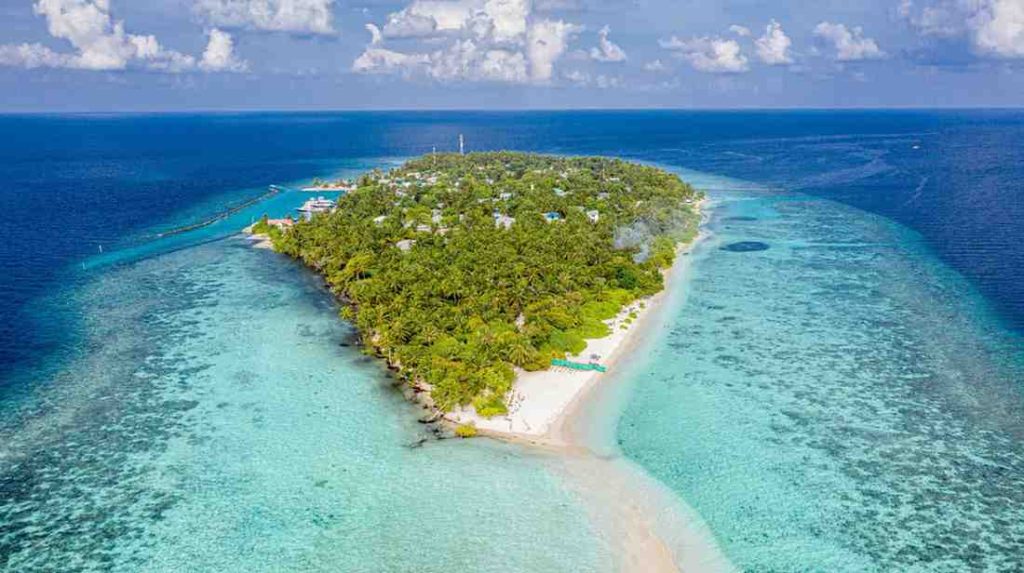
Out past Male, toward the southwest, lies the South Ari Atoll – packed with life beneath the waves. Omadhoo belongs to this stretch, tucked along its upper rim. Divers often come here chasing glimpses of whale sharks, those gentle giants that glide through these waters. Yet finding them near Omadhoo takes patience, since they tend to favor the deeper southern zones more. Spotting one up north? Possible – but it helps to keep looking.
Close to Mahibadhoo, the main island in South Ari Atoll, this place used to be part of the old island-hopping trail. Being near it shapes how much you might spend.
Getting to Omadhoo: Your Two Options
Option 1: One way to reach Omadhoo: hop on a speedboat straight from Male or the airport. Leaving from those spots, the boat cuts across open water without stopping. Roughly ninety minutes pass before arrival – maybe less if waves stay calm. Getting there fast makes this choice stand out, even if the price sits above others. Cost climbs, yet time drops sharply compared to alternatives.
Option 2: Early risers head out on a public ferry from Male, cutting costs with a slow ride toward Mahibadhoo. That trip eats up about four hours under the rising sun. Once landed, another boat waits – this one gliding over to Omadhoo later in the day. Long stretches of travel stack up, sure, yet wallets breathe easier. Skilled island roamers often pick this path when stringing together days across different atolls. Savings pile high; time bends tight.
First Impressions: Arriving at Omadhoo Harbour
Out past the open water, each island journey kicks off by the docks – landing there means your eyes start adjusting right away. At Omadhoo, the dock area remains half-built even now. Signs point to slow movement; nobody was seen working throughout a few days spent nearby, which might mean delays or just an unhurried pace shaping how things unfold.
Near the harbor’s edge stands a small police post. No greeting sign welcomes visitors like on other islands – probably waiting till port work finishes. Travellers should know one thing early: Omadhoo holds an ATM. Few local Maldivian islands offer that. It matters most to those watching their wallet, sparing them long trips from Male with wads of cash.
The Island Itself: Size, Layout, and What You Will Find
A tiny stretch of land, Omadhoo measures just shy of a kilometre long and about 300 metres across. Walking it from tip to edge feels almost instant. Still, within that tight space, things move at their own steady rhythm. You will find a school where children study, along with a smaller place for younger ones learning early lessons. Medical care comes through a clinic that includes medicine supply nearby. Governance shows up in a modest building where island matters get handled. People sweat and stretch near open-air fitness gear placed outdoors. Worship happens at a mosque whose loudspeakers carry far beyond its walls. Visitors stay in several guesthouses scattered around. Eating out means choosing between two or three spots serving meals. Small stores dot the paths too – they pause when prayers call, reopening later according to quiet routines known by everyone.
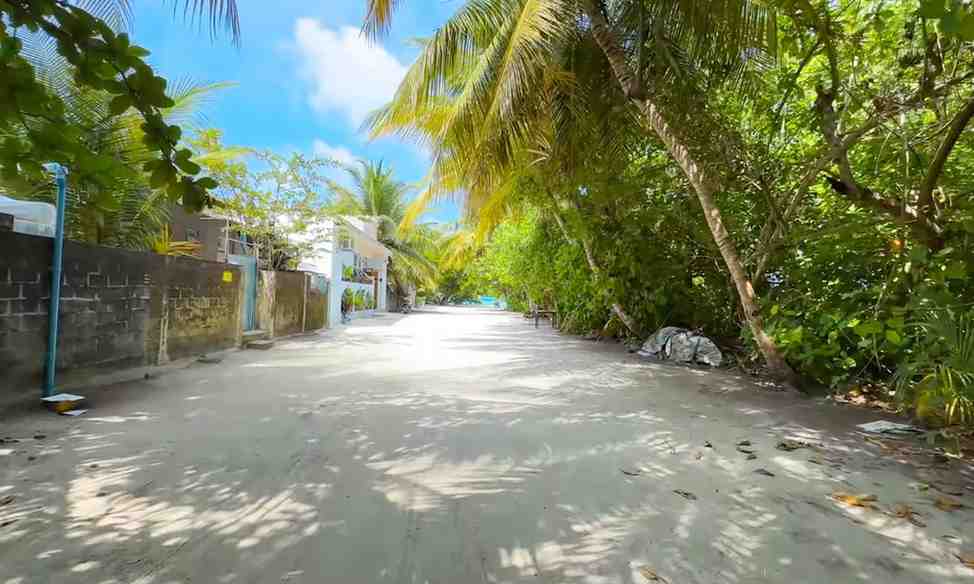
Out here, silence sits heavy between the houses. Trees rise from backyard plots, spreading shade where people live, softening the island’s daytime glare. Along certain road sections, branches meet overhead, forming tunnels of cover. That kind of relief hits harder once the sun climbs high. Clean pavement runs underfoot, uninterrupted by clutter or noise.
Over there, bits of forest push through where you might expect only sand and sun. Tall palms stand like guards along winding trails that seem to appear out of nowhere. Not everything is smoothed down for visitors – some corners stay wild on purpose. Where other islands near here wear polish, this one lets roots show.
Most people living on Omadhoo number about eight hundred. While walking around, you could spot quite a few travelers speaking Russian, mixed in with others from abroad – seems the place has quietly grown popular with them lately.
Key Facilities on the Island
- ATM (not every Maldivian local island has one)
- Police station at the harbour
- Health clinic and pharmacy
- Primary school and preschool
- Island council office
- Mosque
- Outdoor public workout area near the beach
- Local shops (hours vary, close for prayer times)
- 12 guesthouses at time of visit
- A couple of local restaurants
Out here, growth doesn’t shout – it shows up in fresh concrete near the shore. While homes go up, visitors arrive at a pace the place can breathe with. Change is obvious if you look, yet the rhythm stays loose, unhurried. This isn’t polished perfection; it’s somewhere learning how to welcome people without losing itself. Progress creeps in, but not fast enough to erase the quiet.
The Beaches: Bikini Beach, Local Beach, and What to Actually Expect
Every time you step onto a shore in one of the Maldives’ inhabited islands, someone will explain how things work there – it’s just part of arriving. Life on Omadhoo moves by its own rhythm, shaped by deep-rooted beliefs. Swimming spots split naturally: one stretch belongs to those who live here, dressed modestly in line with tradition. The other opens up for travelers wearing familiar swimsuits, often called the bikini zone. Rules shift depending which patch of sand you stand on.
The Bikini Beach (Tourist Beach)
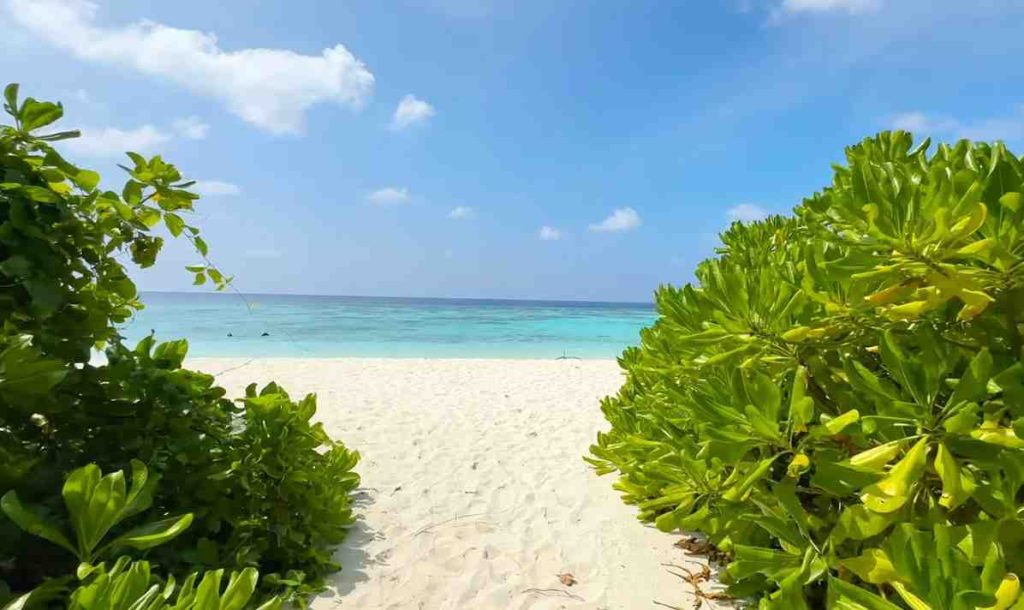
Small though Omadhoo’s bikini beach may be, it still draws attention. Compared to typical Maldivian shores, space feels tighter here. Not long ago – roughly two years back – the stretch of sand ran wider. Then came a barrier splitting zones, shrinking the swimwear-friendly patch while boosting room for residents nearby. Learning this ahead helps temper expectations once you step onto the island.
Still, tiny doesn’t equal dull. Overhead cover appears here and there, along with sunshades plus places to sit. As peak months drew near, people arrived steadily – yet never packed in. Twelve lodges stand ready to fill beds, yet the shore stayed calm when seen up close.
Down by the shore, certain stretches hold hidden stones beneath the waves. When the sea pulls back, those spots turn tricky for swimmers. Open sandy zones – free of rubble – are limited, hugging the edge where land meets water. High tide smooths things out, making dips far easier. Timing matters more than most expect; tides reshape how the place feels entirely.
Swings sit near the shore, turned toward open water, perfect for snapshots. A tiny Amadu marker stands close by, unassuming. Fishing line holds bits of shell and coral, hung like quiet decorations. These details bring a handcrafted warmth to the sand. Nothing here gleams or feels manufactured. Still, its rough edges hold more soul than gloss ever could.
Here’s something to keep in mind: the line between the bikini section and the local area acts like a firm border. Crossing it in bikinis or typical Western swimwear isn’t allowed by rule. While a few visitors still move past it, doing so ignores local norms. Respect shows when people stay on the side meant for them.
The Local Beach (Large Sandy Area)
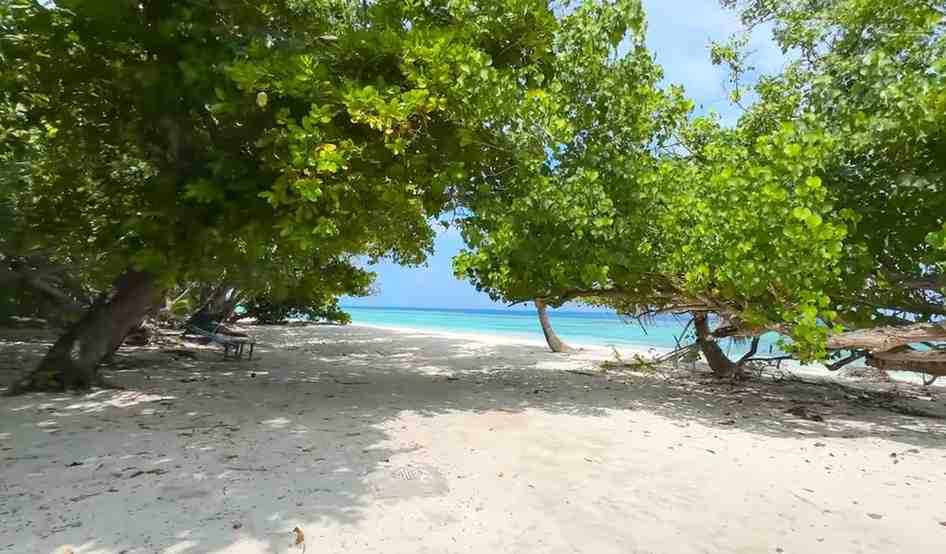
Far from where tourists gather near the bikini cove, a broad stretch of sand opens up under local care. Not many walk here, which keeps it still – wide enough to wander, soft beneath bare feet. Palm fronds dip low, nearly brushing the waves, casting slants of shade where light fractures on wet surface. Snapshots taken at dawn catch its raw charm best, though swimming isn’t common for outsiders. Beauty shows plainly, without needing crowds to prove it.
When night falls, more people show up at this stretch of sand. Though the rest of the island slows once it gets dark, here things shift into rhythm. As the heat fades and daylight slips away, folks gather near the shore just to be around others.
Snorkeling at Omadhoo: The Reef That Surprised Everyone
What makes Omadhoo different isn’t its beaches or buildings, but what lies beneath the waves. Snorkeling around this island stands out for reasons beyond chance. During two distinct outings from the wooden pier, we saw more vibrant sea life than on nearly every other stop across thirty islands. Each dip into the water brought something unforgettable.
Down near the jetty, the reef stretches out beside the island, then slips into deeper water without much warning. Thick layers of coral cover the area, alive with shapes and shades – blue ones first catch your eye, followed by deep purple, even an almost-white pink that hardly anyone ever sees. Among these, soft corals wave gently, packed tightly where clownfish dart through them. Snorkelers often cross oceans just hoping to find scenes like this one.
Marine Life You Can Expect to See
- Nowhere else along the 30-island stretch showed quite as many white tip sharks. Though seen on several reefs, Omadhoo stood out because they appeared more often there. Each session recorded multiple encounters, far exceeding what was spotted elsewhere. This patch of coral seems to hold particular appeal for these creatures.
- Out of nowhere, eels showed up a lot during both dives. One trip underwater had so many eels weaving through rocks that calling it anything but an eel day feels wrong. Some were huge, jet-black morays lurking in cracks. Others popped up as smaller speckled types slipping between crevices. Lengths went from just shy of a handspan to longer than an arm.
- Out here, fish swarm every corner of the reef. Not just a few types – loads of them, different shapes and colors everywhere. This isn’t a place where your eyes find nothing to land on. Instead, movement fills each part of the view.
- A single sea turtle made an appearance during the pair of snorkeling trips. That was the only one seen throughout both outings.
- When darkness falls and the jetty light flips on, nurse sharks begin slipping into shallow water below. Right there, under the glow, stingrays sometimes glide through too. Just being present after sundown delivers something rare – no effort needed. The scene unfolds by itself when night takes hold.
Here’s something seen on the ground: people toss compost leftovers off the dock, saying they’re giving meals to fish and sharks. Though meant kindly, dropping organic trash into saltwater doesn’t help ocean ecosystems. Nighttime brings crowds drawn by animals gathering near pilings, yet those aware of coral wellbeing often feel uneasy watching. The scene pulls creatures close, true – still, it leaves questions in its wake.
Whale Sharks and Excursions: What South Ari Atoll Offers
Most days, whale sharks stick to the southern end of South Ari Atoll – Omadhoo lies up north inside the same stretch of islands. Just because you stay near Omadhoo doesn’t shut the door completely on seeing them. The truth? You will need a long boat ride southward, aimed straight at where those animals gather. Spotting one without traveling won’t happen often, if ever. Trips built only around nearby waters tend to come back empty.
Out past the reef, boats weave through open channels where whale sharks sometimes glide below. Local guides run these trips, using small guest houses as bases. A proper hunt means traveling far, not just drifting near shore. Most outings last half a day since spotting one isn’t quick or certain. These gentle giants roam wide, making patience part of the journey.
Other Available Excursions
- Among island trips, those featuring nurse sharks come up often. Manta rays draw crowds too. These outings rank high on visitor lists. Some find them the top choice around here
- Coral garden snorkeling trips
- Guided snorkeling tours to specific reef sites
- Whale shark search tours into South Ari Atoll
A few ways to enjoy the water here exist, yet choices feel slim. A single jet ski showed up while we were around. Instead of many machines, kayaks sit ready, along with paddleboards waiting near shore. Banana boat rides? Not seen at any beachfront. Larger gear for thrill seekers does not line the coastline visibly. Still, asking a guesthouse might uncover hidden chances.
Staying on Omadhoo: What to Know Before You Book
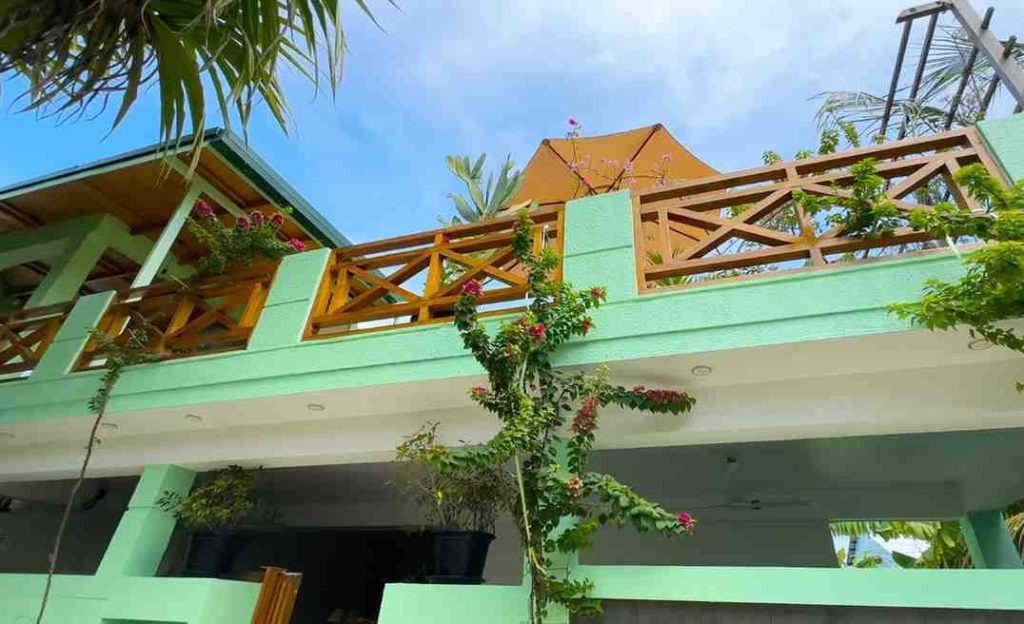
Most guests who stayed here found places without trouble. Twelve spots welcomed visitors during this trip, fitting well for such a small island. Choices ran from bare-bones rooms run by families to cleaner spaces with few frills. Some offered less comfort, others gave just enough polish. Prices stayed low across the board, nothing stretched into luxury. A stay usually meant simple beds, open layouts, shared bathrooms. Even the higher-end picks kept things modest. Comfort mattered, yet never at high cost.
Wi-Fi tends to act up more than once when visiting small guesthouses around the Maldives – Omadhoo included. Because signals often flicker or drop suddenly, counting on smooth video playback rarely works out. Should evening hours leave room for screen time, get those episodes, films, or clips saved ahead of travel. While spotty internet isn’t something this one place alone struggles with, knowing about it early changes how you prepare. Without backup plans ready, quiet moments might feel longer than expected.
After sunset, things slow way more than most expect. Once night settles in, hardly anything stirs beyond the palms. Most of what pulls people here happens under daylight – snorkeling reefs, walking sandy edges. Anyone hoping for bars or constant chatter might feel out of step. Quiet lovers who enjoy reading by lamplight and drifting through clear water find it just fits. Stillness isn’t lacking – it’s built into each hour.
Local Life on Omadhoo: Observations From the Ground
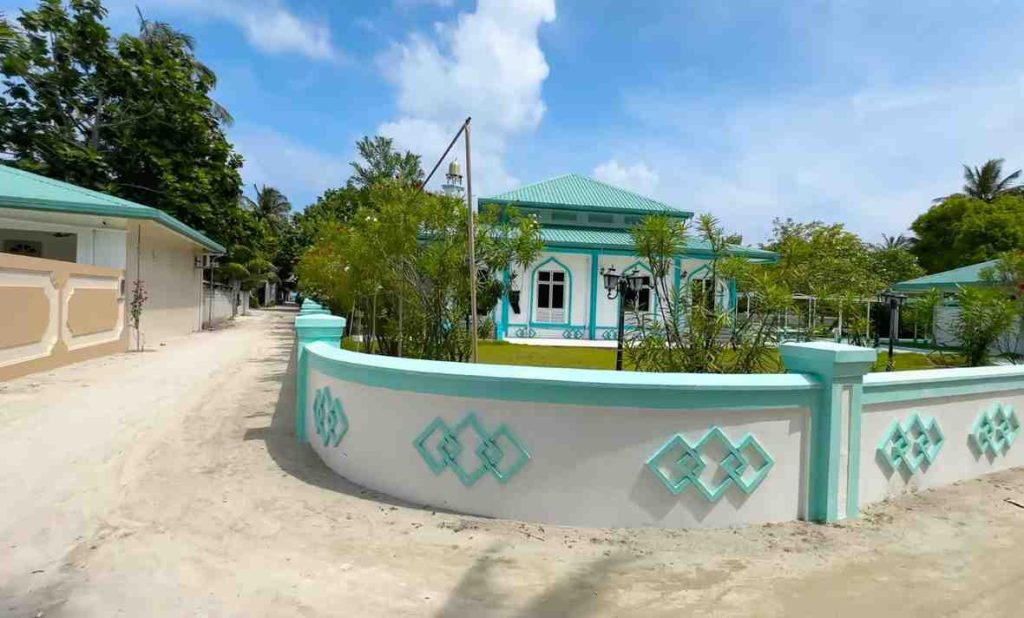
What really draws people to local island hopping in the Maldives isn’t just scenery – on Omadhoo, daily rhythms unfold without pause. Life moves at its own pace here, shaped by routine rather than tourism. Instead of resorts, you find weathered wooden doors, kids racing bikes down narrow lanes, fishermen mending nets near the dock. The air carries salt, laughter, the sizzle of street food at dusk. Shops open late, close early, run on trust more than timetables. This isn’t performed for visitors. It simply is.
Out there near the shore, I saw someone handling valhomas – Maldivian dried tuna – for dinner later. Smoke first, then hours under the sun, that is how they ready the fish. Pieces moved bare-handed onto sand, right where people walked. A quiet moment, yet loud with meaning, far from anything polished inside tourist spots.
Out in Omadhoo, the call to prayer doesn’t just fade into the air. It settles over things like something you can feel. Each time it sounds, life pauses – stores pull down their shutters. Later, when the moment passes, doors swing open again. People move with it, adjusting without thinking.
Work continues across the area. New builds show up here and there, giving the sense that changes are slowly taking shape for people who live here and those passing through. Where a wide open stretch once stood, a compact soccer field now sits – proof that ideas about land use keep shifting.
Most days near the shore, trash spilled from bins untouched by workers. That sight might surprise some visitors expecting tidier scenes. Still, this doesn’t mean people there ignore upkeep. Away from the coast, paths stayed free of litter. Spotless sidewalks told another story altogether.
Omadhoo vs Other Maldives Local Islands: How Does It Compare?
Out past Omadhoo, the reef pulls attention fast – white tip sharks glide through clear water while schools of fish crowd every ledge. Not far below, soft corals bloom in uneven patches, their shapes shifting with the current. Among them, hints of pale pink break the usual pattern, a shade seldom seen nearby. This mix – life packed tight, colors that surprise – lifts the dive beyond what most island edges offer. Few spots along this stretch match its quiet intensity.
Smaller than most nearby spots, the sandy stretch here doesn’t spread too far. When swimming matters more than snorkelling, visitors might prefer different islands instead.
Out here in South Ari Atoll, spotting whale sharks or mantas feels almost natural – though you’ll need a boat ride to find them, not just a stroll into the water. The spot itself makes up for the extra step.
Life moves at its own pace here, so expect fewer shiny surfaces compared to busier nearby islands. Still, what it lacks in comfort shows clearly in raw, everyday moments you won’t find elsewhere. While newer resorts stack amenities, this place holds onto habits unchanged by guest demands. A different rhythm runs through the streets – slower, maybe rougher, yet closer to how things were before crowds arrived.
Practical Tips for Visiting Omadhoo Island
- When the tide is up, that’s when swimming works best. Near Bikini Beach, things get tricky as the water pulls back and turns too shallow during low tide. Instead of just showing up, check how the tides are moving before heading out. Timing makes a difference if you want to actually swim.
- Just because there’s an ATM doesn’t mean it works – check its status before relying on it. Money changes hands in different ways here, so having local currency helps when machines fail. Start your visit with enough cash pulled from Male just in case. The island keeps things slow, including how often that machine gets refilled.
- Start your trip with shows already saved. Since connections at small lodgings tend to fail, counting on live video could leave you waiting. Without steady signal, smooth playback isn’t something you can expect.
- When darkness falls, head down to the jetty. Beneath its lit beams, nurse sharks drift slowly through the water. Not many places give you moments like this without charging a cent.
- Here’s something to keep in mind: that line drawn on the sand isn’t just decoration. It marks a boundary shaped by tradition, not rules made up on the spot. Tourists wearing standard swimwear fit fine in their assigned zones – no need to wander beyond. Stepping past it might seem harmless, yet locals view the space differently. Their section follows quiet understandings passed down over time. Blending in means noticing where others draw their limits. Comfortable as you may feel, some spaces aren’t meant for sharing. The sun shines equally, but habits under its light vary. Staying put respects more than sand – it honors unspoken norms.
- Start by asking at your guesthouse about trips nearby. Whale sharks might be spotted on boat rides arranged right there. Manta outings also leave from local spots – check what time they start. Snorkel paths to coral gardens get planned once you’re settled in. Costs shift now and then, best to clear up every detail when you arrive.
- Midday might find stores shut – prayer breaks shape their schedules. When planning purchases, note these pauses come regularly. Need an item later in the day? Timing matters more than usual. Hours shift around moments of worship, so adjust quietly.
- Out past the jetty, start your swim with mask and tube. Right where the structure meets open water lies the richest stretch of underwater activity. Move alongside the coral ridge; there you’ll find clusters of fish tucked between formations. The drop near the pilings draws bigger species too.
Is Omadhoo Island Worth Visiting?
True, it can work – if you see Omadhoo for what it really is, not what some claim.
Not quite what you’d picture when thinking of tropical shores. Tiny stretch of sand where bikinis show up, water access changes with the moon’s pull, simple setups near the shore. Seeking wide golden coastline with perfect waves? This spot won’t match that dream. Omadhoo offers something quieter instead.
White sand curves around the shore, yet what draws people is what lies beneath. Life pulses under the waves – reef fish dart where sunlight cuts through blue water. Sharks appear often here, more so than nearby spots with similar reefs. Soft corals wave slowly, each patch different from the next. Night falls. Near the dock, dark shapes glide – a group of nurse sharks moving together without warning or reason. Moments like these do not need planning. They happen. You remember them later.
Out here, growth feels unsure, shaped slowly by people who aren’t quite sure what comes next. Omadhoo holds a roughness bigger places sand smooth. You notice it first in fish laid flat on warm ground, left to bake under sun. Time folds around prayer calls, sharp and sudden from the mosque roof. Evenings stretch empty, loose, without schedule or demand. Past dusk, the dock draws shadows – sharks glide beneath like clockwork. Resorts strip these moments clean; they never let them exist.
Most who save cash while exploring Maldives islands find Omadhoo worth visiting – snorkel lovers especially. Stay at least two nights, dive into the sea on separate days, then head toward the dock when night arrives. This version of Omadhoo feels full without rushing.
Quick Facts: Omadhoo Island at a Glance
- South Ari Atoll Maldives
- Stretching close to a kilometer long, this island spans roughly 300 meters across. Its narrow shape stands out when viewed from above. Though small in distance, it covers enough space to support sparse vegetation. From tip to far end, the terrain remains fairly consistent. Width stays nearly uniform along most of its body
- Local population:Around 800 residents
- Atoll capital nearby Mahibadhoo Island South Ari Atoll
- Speedboat rides from Male take around one thirty up to one forty-five. Getting there fast, yet duration shifts with weather. Water conditions play a role each trip. Some days it moves quicker, others stretch longer. The clock depends on waves that day. Time floats between ninety and hundred five minutes. Every journey different, though never much beyond that
- Four hours on a public ferry gets you to Mahibadhoo. From there, another boat takes you onward to Omadhoo
- Number of guesthouses:12 at time of visit
- ATM available: Yes
- Out here, space is tight – only certain spots welcome visitors. The bikini beach fits that shape
- Snorkeling near coral reefs stands out here. After sunset, people gather by the pier – sharks show up when lights reflect on the water
- Out past the break, white tip sharks glide through blue shadows. Slipping between cracks, moray eels watch without blinking. Along sandy patches, nurse sharks rest like they’ve forgotten time. Bright flashes dart – reef fish of every color mix in constant motion. Hard structures rise, built slow by living rock. Elsewhere, soft corals wave as if breathing. High above the bottom, a turtle cuts across open water
- Out exploring the water, you might catch whale sharks on a tour. Sometimes manta rays draw trips out beyond the reef. Slipping into shallower zones, coral gardens open up under your fins. Other times it’s calm nurse sharks that guide the swim
- Evening entertainment: Minimal, quiet island pace
- Spotty Wi-Fi shows up everywhere you stay. Most places barely keep a signal alive
Read More
- Fulidhoo Island Maldives: The Ultimate Guide to Local Food, Fishing & an Authentic Maldivian Experience
- Fulidhoo Island Maldives Travel Guide 2026: The Best Budget Local Island Experience
- Maldives Without a Resort: How to Travel for $49/Day, The Secret Most Tourists Miss
- Maldives on a Budget: 6 Days, 5 Nights for Under $100 Per Person (2026 Guide)
- How to Travel the Maldives on Budget: Complete Local Island Travel Guide with Prices, Transport & Island Tips