Most people think the Maldives is only for honeymooners who can afford a $3,000-a-night overwater villa. That is not the full picture. The Maldives has a completely different side – one built for real travelers on real budgets – and it is called local island tourism.
Communities that Maldivians live, fish, and conduct their daily activities are the local islands. They also receive guests in guesthouses, local cafes, dive shops, and bikini beaches. The water is the impossibly turquoise water. The reefs are just as alive. The evening is also as yellow as the sunsets. But the cost? Not even remotely like a privatized resort.
This guide will discuss the 8 best local islands to visit in the Maldives on a budget, including the real prices, real methods of transportation, what to do on each island, and what kind of a traveler each island would best suit. All the prices and information in this guide are, therefore, founded on a documented research, and not approximations and guesses.
Best Local Islands in Maldives for Budget Travelers
Not every local island in the Maldives has the same experience and wrong choice may turn your trip upside down. Others are crowded and social such as Maafushi and others are isolated and quiet such as Fulidhoo. Certain ones are more ideal to snorkel directly off the beach such as Ukulhas whereas others are favorable in regards to diving or whale sharks as is the case with Dhigurah.
This guide is divided into each island depending on what really counts in planning a budget trip. You will know where each of the islands is found, the best of each, and its actual cost per day, and also how easy it is to access on Malé and what sort of experience to expect after you get there.
Rather than guessing or having to use the generic lists, this is a useful, island-by-island comparison that would enable you to make a fast decision as to which destination best suits your travel style and budget and what is important to you.
Islands Covered in This Guide
- Maafushi – The Most Popular Local Island
- Dhiffushi – Three Beaches, Total Calm
- Ukulhas – The Eco-Friendly Paradise
- Thulusdhoo – The Surfer’s Capital
- Fulidhoo – Nurse Sharks at Your Doorstep
- Gulhi – Hidden Gem of South Malé Atoll
- Dhigurah – Whale Sharks & Long Beaches
- Rasdhoo – Diver’s Paradise on a Budget
1. Maafushi – The Most Popular Local Island in the Maldives
Best for: Solo travelers, first-timers, social travelers who want variety
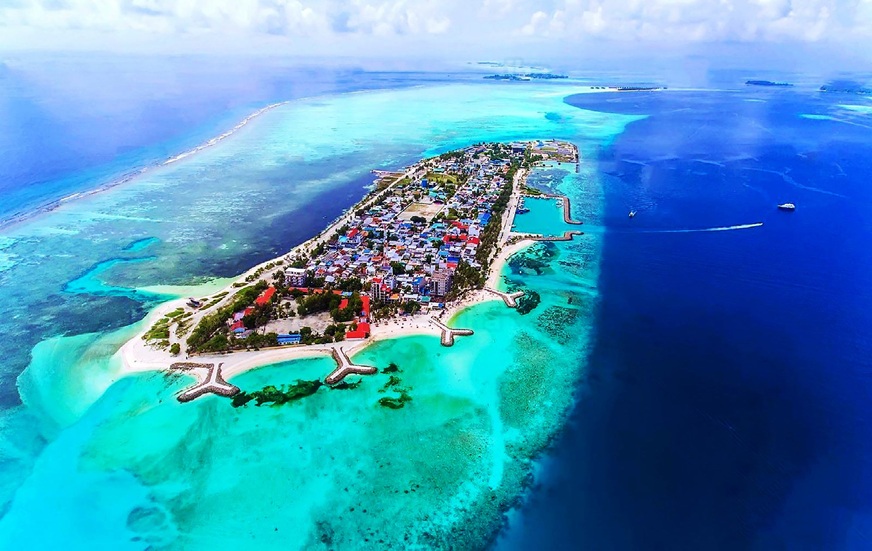
Mentioning budget traveling in the Maldives, Maafushi is the first destination to be mentioned, and this is not a coincidence. It is the most sophisticated local island in the archipelago, paved roads, steady infrastructure, an urban atmosphere and has more tour operators per square kilometer than any other local island in the circuit.
Maafushi is the closest local island to the Malé, being only accessible by a shared speedboat (only 30 minutes). The result of that accessibility has seen it become the entry-level destination of first time visitors and a permanent anchor among the visitors of the multi-island journeys.
The island has an all-day schedule of activities. Jet skiing and parasailing are provided by water sports operators. The usual touring activities are snorkeling, dolphin watching, sandbank picnic and diving – where a single-dive tour commences at approximately 50 USD because of the competitive concentration of the dive shops. It has a designated Bikini Beach at the northern end where tourists can be dressed up in swimwear, otherwise, it is not allowed elsewhere on the island due to the respect of the local Muslim practices.
Maafushi is also among the few localized islands that have a vibrant nightlife. It also has live DJs, beach parties, and a nearby floating bar which can serve alcohol (alcohol is prohibited on land anywhere on the local islands). This is where you will find the most social version of the local island life in the Maldives.
The restaurant business is also truly fine. Local cafes offer you a taste of real Maldivian cuisine such as Mas Huni and Garudhiya, and even vegetarian and vegan ones cannot be found on every island.
One sincere word: Maafushi becomes very frenzied particularly in high season. The Bikini Beach is especially able to be crowded. It is not the place to be in case you want peace and quiet. However, when it comes to convenience, choices and the least difficult way of getting introduced to the local island life in the Maldives, Maafushi delivers.
Maafushi Price Guide
| Category | Estimated Cost (USD) | Details |
|---|---|---|
| Budget Guesthouse | $50–$60 / night | Maafushi Inn, Nala Island Village |
| Mid-Range / Premium | $100–$150+ / night | Arena Beach Hotel, Kaani Grand Seaview |
| Meals for Two | $10–$20 | At local restaurants |
| Public Ferry from Malé | ~$3 / person | ~90 minutes journey |
| Shared Speedboat | $25–$30 / person | 30–45 minutes journey |
| Single Dive | From $50 | Competitive pricing, many operators |
| Day Trip to Luxury Resort | $100–$150 | Enjoy resort amenities without overnight price |
Budget reality check: You can really do the Maldives dream at Maafushi, spending about $50/night in a guesthouse – against $3,000/night in an island resort. The sky, the water and the reef appear to be the same.
2. Dhiffushi – Three Bikini Beaches and Total Calm
Best for: Couples, families, travelers seeking authentic quiet
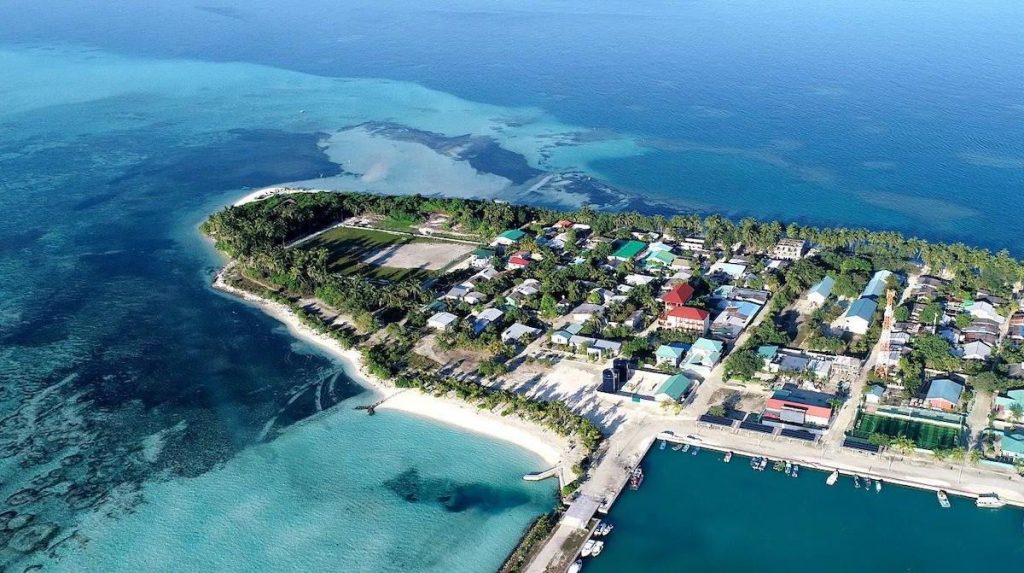
Provided Maafushi is the bustling center, Dhiffushi is the less busy and more laid-back option and only a 45-minute speedboat ride away from the airport. Dhiffushi is especially famous in that regard: the island is located in the North Malé Atoll and boasts a multiplicity of bikini beaches, namely North, South, and Sunrise (East), as opposed to the single small location most local islands provide.
This is important than it seems. In an island where Bikini Beach is just but one small beach, the place can be crowded and even limiting. You can actually choose on Dhiffushi on how to be depending on the wind, time of day, and the amount of space you wish to have.
Even the island itself is not that big, and one can walk around it in 20-30 minutes. Sandy streets, there are not many motorbikes, a truly quiet beat. Life here goes on as natural and tourism does not overtake, it is a part of local life.
The most discussed experience on Dhiffushi is free of charge: in the evenings, stingrays and baby sharks collect almost on the beach, and you can observe them sitting in the water and do not need to book or make a boat excursion. It is that type of random experience that makes you remember why traveling around local islands is so brilliant.
In the case of structured activities, there are various diving centers, water sports operators on the island that provide snorkeling, diving, jet skiing and kayaking. The island is also a good hub to those travelers who desire to enjoy the home base that is very peaceful and yet have access to day trips to the excursions.
Dhiffushi is more calm than Maafushi and, more importantly, will suit the needs of a traveler who truly prefers to turn off. It is also suitable in families that have children because the waters are small and not very rough, hence a manageable and safe place.
Dhiffushi Price Guide
| Category | Estimated Cost (USD) | Notes |
|---|---|---|
| Accommodation | $50–$250+ / night | Bibee Maldives (budget) to Stone Hotel (4-star) |
| Meals | $5–$15 / meal | Cozy Café ($5), Café 420 (slightly more) |
| Excursions | $25–$100 / activity | Snorkeling, dolphin watching, sandbank trips |
| Local Ferry from Malé | ~$1.50 | ~3 hours journey |
| Scheduled Speedboat | $35–$40 | ~45 minutes journey |
3. Ukulhas – The Maldives’ Most Eco-Friendly Local Island
Best for: Eco-conscious travelers, snorkeling enthusiasts, solo travelers, couples
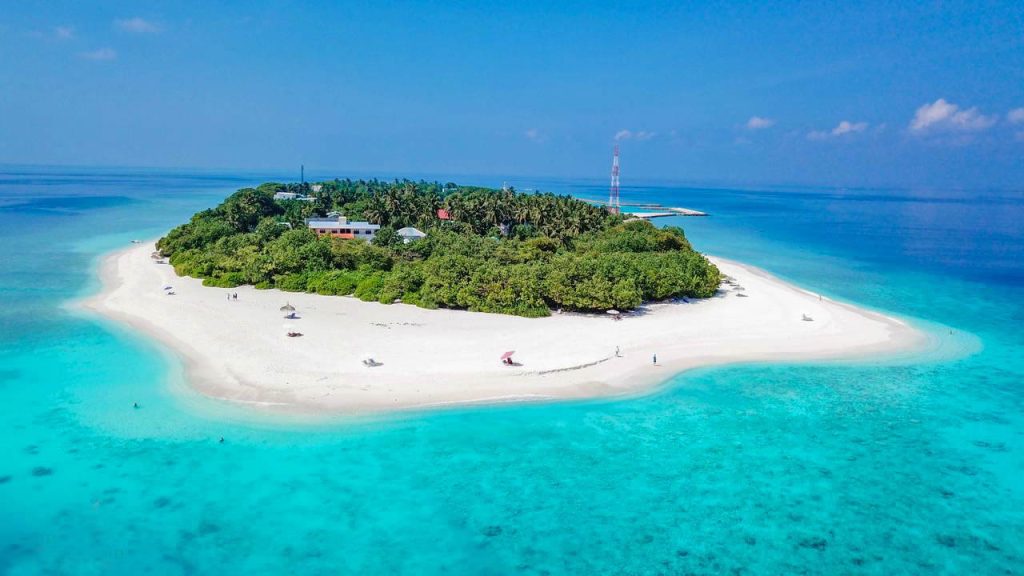
Ukulhas has a special status among Maldivian local islands. It is considered by many to be the most environmentally friendly destination in the country – it has won the Maldivian government Green Leaf Award – and it supports that image by doing exactly what they can see. The island has regular waste management campaigns as well as operational coral gardens. It is among the neatest local islands you will see anywhere on the archipelago.
Being situated in the North Ari Atoll, just a 90 minutes ride by speedboat off Malé, Ukulhas has a Bikini Beach that measures nearly 1km long, and is considered to be the longest and cleanest of all the local islands. The beach is frequently cleaned and well taken care of with the white sand and clear and calm water.
The house reef is what makes Ukulhas unique in the perspective of snorkeling. It is only meters off the shore, and so you can step off the beach and literally swim with sea turtles, reef sharks and even manta rays. In the majority of islands, a boat trip to see a snorkeling worthy reef has a fee. Here, you just walk in.
The island also boasts of 365 days a year of Manta Ray sightings and a harbor jetty called disarming as the Shark View Point where lemon sharks and stingrays deposit. In the case of the marine life that marine life within the reach of the local lifestyle on the island, Ukulhas has little to compete with.
On top of the reef, Ukulhas is an authentic culture. The island preserves a sense of living history with local cafes, old-school boatyards and an ancient coral-stone mosque, built in 1656, and the island has lost in more touristic islands. It is small and is walkable and the ambience is quite much quieter and more pensive compared to Maafushi.
One aspect worth mentioning: Ukulhas is slightly pricier than Maafushi to stay at. The local premium that is projected is accompanied by a small premium in the prices. Nevertheless, it is still easy to keep costs daily below 100 upon making intelligent decisions.
Ukulhas Price Guide
| Category | Estimated Cost (USD) | Notes |
|---|---|---|
| Budget Guesthouse | From $52 / night | Entry-level options available |
| Boutique Beachfront Hotel | $110–$200 / night | Premium local feel |
| Meals | $10–$30 / day | Local cafes affordable; seafood dinners more |
| Speedboat from Malé / Airport | $50 / person (one-way) | ~60–90 minutes |
| Public Ferry | $4 / person (one-way) | 4+ hours; limited departure days |
| House Reef Dive | From $30 | Walk-in reef access from beach |
| Manta Ray / Sandbank Tours | $50–$90 | Seasonal manta ray sightings peak Nov–Apr |
Who should choose Ukulhas? Snorkeling lovers who do not need to spend money on boat tours every day, environmentally-friendly tourists, families with children (clear water, small walk-through island), and single travelers who want to be able to relax and have a good Internet connection.
4. Thulusdhoo – The Surfing Capital of the Maldives
Best for: Surfers, adventurous travelers, solo explorers, art lovers
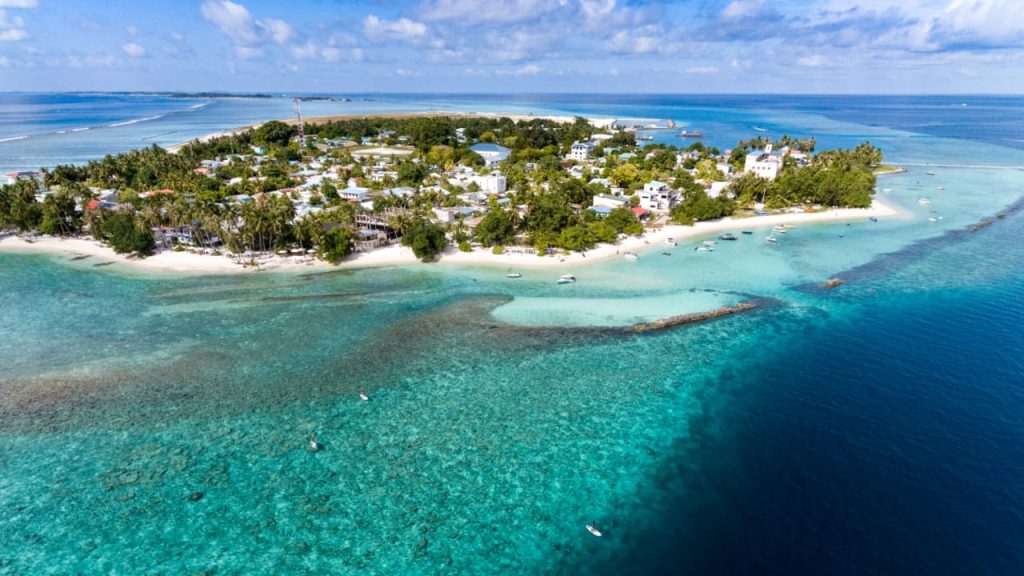
Thulusdhoo is not any other island among the locals in the Maldives. It is not that widely recognized as a reef snorkeling or a quiet place. It is famous with waves – two globally recognized surf breaks which have put this small island in the spotlight of hardcore surfers around the world.
The former is Cokes – difficult right hand wave that can be approached without the use of a boat and right at the beach. The second one is Chickens – a long left-handed one that can be reached within an approximate 5 minutes boat ride at an approximate cost of 10 dollars. The two breaks have given Thulusdhoo a distinct identity within the Maldives where surfing has traditionally cost a lot of money only to be done in packages offered by the resorts.
Thulusdhoo has forged its own identity beyond the waves. The walls around the island are covered in vivid murals. Sleek beach cafes appeal to an artistic type of crowd. It has an artistic soul which makes it stand out of the average local island experience.
Another quite peculiar peculiarity of the island is a truly unique one: here is the only factory of Coca-Cola in the world where desalinated sea water is used. It is a weird industrial history of an otherwise tropical island and Thulusdhoo now has the title of being called Coke Island by frequent travelers.
Even non-surfers do not have nothing to do. Coral Garden snorkeling location is also superb and one can dive with sharks or manta rays, also dolphin tours and sandbank trips. Island hopping is actually simple considering this island is just 27km off Malé and is a line of ferry to other of the most popular local islands such as Dhiffushi and Huraa.
Dining in Thulusdhoo is cheap – $5 to $15 per meal in the local restaurants – and guesthouses are spread out in the spectrum of affordable and comfortable mid-range. The Malé ferry is only $2-3 (approximately 1.5-2 hours), which is one of the cheapest islands to access via public transportation.
Thulusdhoo Price Guide (2026)
| Category | Estimated Cost (USD) |
|---|---|
| Accommodation | $45–$250+ / night |
| Meals | $5–$15 / dish |
| Local Ferry from Malé | $2–$3 (1.5–2 hours) |
| Speedboat from Malé | $25–$30 (~30 minutes) |
| Surf Boat Taxi to Chickens | $10 |
| Excursions (snorkeling, diving, sandbanks) | $20–$100 |
5. Fulidhoo – Nurse Sharks, Bodu Beru, and Genuine Quiet
Best for: Marine life lovers, couples seeking privacy, solo travelers wanting authenticity
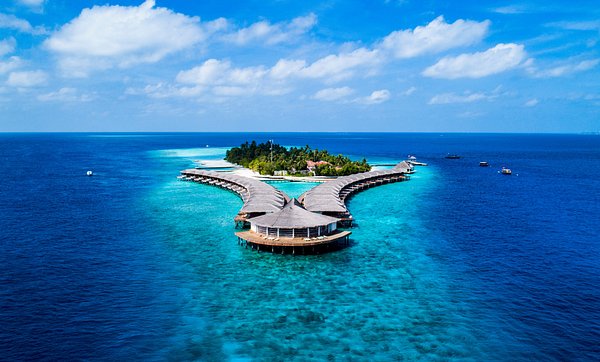
Fulidhoo is the most gorgeous and authentic local island in the Maldives – and the least discussed in the general travel media. It is found in the Vaavu Atoll, about 57km away in Malé and thus requires a little more effort to access in comparison to islands nearer to the capital. It is that distance that makes it special.
The island is tiny. The route around the entire perimeter is approximately 15 minutes. It is devoid of cars and motorbikes. It has a population of approximately 200 people. Living is totally relaxed and the environment is as non tourist resort as possible without sacrificing good guesthouse facilities and good boat services.
There is truly exceptional marine life surrounding Fulidhoo. The island is also known to have the Shark point which is home to dozens of the gentle nurse sharks and stingrays that are found in very shallow waters just in the waters near the shore. They allow you to snorkel without paying a boatman to do so. Local places such as Miyaru Kandu and Fotteyo Kandu are regarded as world class by the diving fanatics.
Fulidhoo Bikini Beach has powdered white sand and crystal clear turquoise lagoon which is best suited to swimming. The place assigned is clean and does not seem like it is overcrowded since the total number of tourists on the island at any given time is small.
Perhaps the most outstanding cultural experience that can be received here is a Bodu Beru performance – traditional Maldivian drumming, which has strong cultural foundations. Having just approximately 200 people on the island, visitors actually co-exist with the community and not transit through it.
Fulidhoo Price Guide
| Category | Estimated Cost (USD) | Notes |
|---|---|---|
| Budget Guesthouses | From $40 / night | Fulidhoo White INN and similar |
| Mid-Range Options | $80–$150 / night | Kinan Retreat, Madi Grand Maldives |
| Dining | $10–$30 / meal | Dream Hut café: $10–$15; hotel restaurants more |
| Local Ferry from Malé | $4 / person | ~3.5 hours; runs 3 days per week only |
| Speedboat from Malé | $40–$45 / person | ~1.5 hours; runs daily |
| Snorkeling Trip (sharks/turtles) | $50–$60 | Excellent value for encounter quality |
| Scuba Diving | ~$75 / dive | Access to world-class nearby sites |
Critical information in the ferry: The local ferry to Fulidhoo operates 3 days a week only. It is wise to pre plan your arrival and departure days or get the daily speed boat service instead.
6. Gulhi – The Hidden Gem of South Malé Atoll
Best for: Budget-conscious travelers, couples, solo adventurers who want fewer tourists
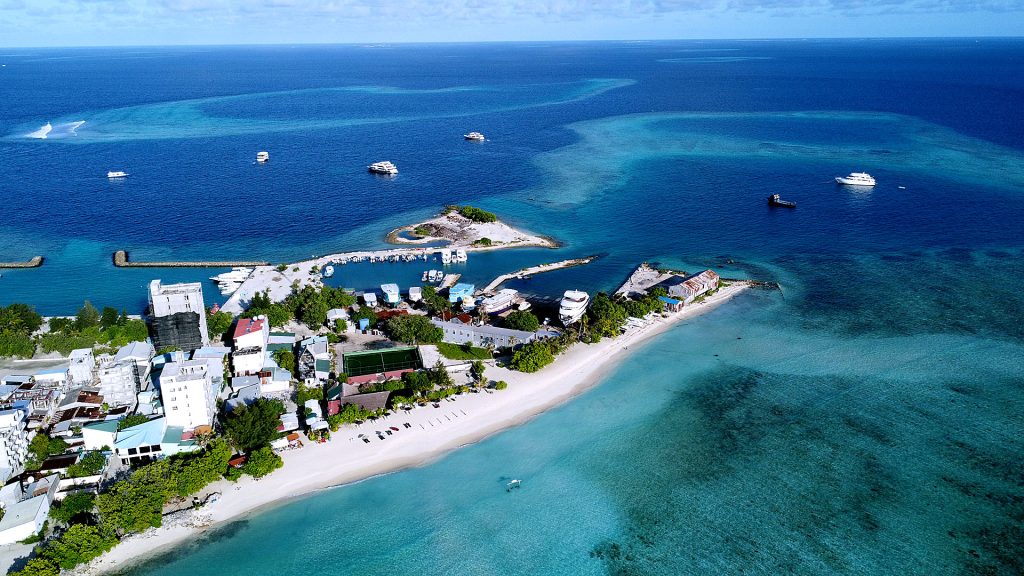
Gulhi is the type of an island that thorough budget travelers speak of in a whisper as it is a secret which they are not entirely sure they want to reveal. It is only 25-30 minutes by speedboat of only 21km south of Malé, in the South Malé Atoll, which is on the edge of one of the cheapest local island connections in the Maldives a local ferry of only 80 minutes (only 1.50 to 2.00).
Gulhi is an area that does not seem to be touched even though it is so close to the capital. It is not as commercialized as Maafushi, not as busy as Dhiffushi during the high season and has a strong foundation as a traditional fishing village. Even the country has its oldest active dockyard on the island which most of the tourists have totally forgotten.
Many of the local islands are often referred to the Bikini Beach, which is one of the best. It is characterized by powder-soft white sand and a shallow crystal-clear lagoon which is excellent in swimming and floating. The water in the lagoon is so smooth and clear that it seems to be artificial.
Five star guesthouses such as Ayala Oceanview Maldives (the top rated in terms of cleanliness and an onsite dive shop) and Avyanna Gulhi Beach Hotel (regarded as being on the beach and having an outstanding staff) will keep the total under 50 per room in their low-end rooms. Food at local establishments costs about $5 or so, and this is as inexpensive as one can find at any place in the Maldives.
Another useful fact: Gulhi does not have an ATM. Carry cash in USD or Maldivian Rufiyaa (MVR) prior to arrival. Credit cards are accepted in some hotels, however, not assumed.
On activities, Gulhi is a great starting point to snorkel with nurse sharks, manta rays, dolphin watch, sandbank day trips and surfing at a local break known as “Quarters.” The island can be covered on foot within 10 minutes in an end to end manner keeping the internal transport requirements to zero.
Gulhi Essential Travel Info
| Category | Details |
|---|---|
| Transport from Malé | Speedboat: 25–30 min ($30) | Public ferry: ~80 min ($1.50–$2.00) |
| Best Time to Visit | December to April (dry season – calm seas, sunshine) |
| ATM | None on island – bring USD or MVR cash |
| Dress Code | Modest clothing in the village; swimwear only at Bikini Beach |
| Budget Guesthouses | Under $50/night – Ayala Oceanview, Avyanna Gulhi Beach Hotel, Beach Stone |
| Local Meals | ~$5 per meal at local spots |
7. Dhigurah – Whale Sharks, Long Beaches, and a Giant Sandbank
Best for: Marine life seekers, photography lovers, travelers who want resort-quality experiences at local prices
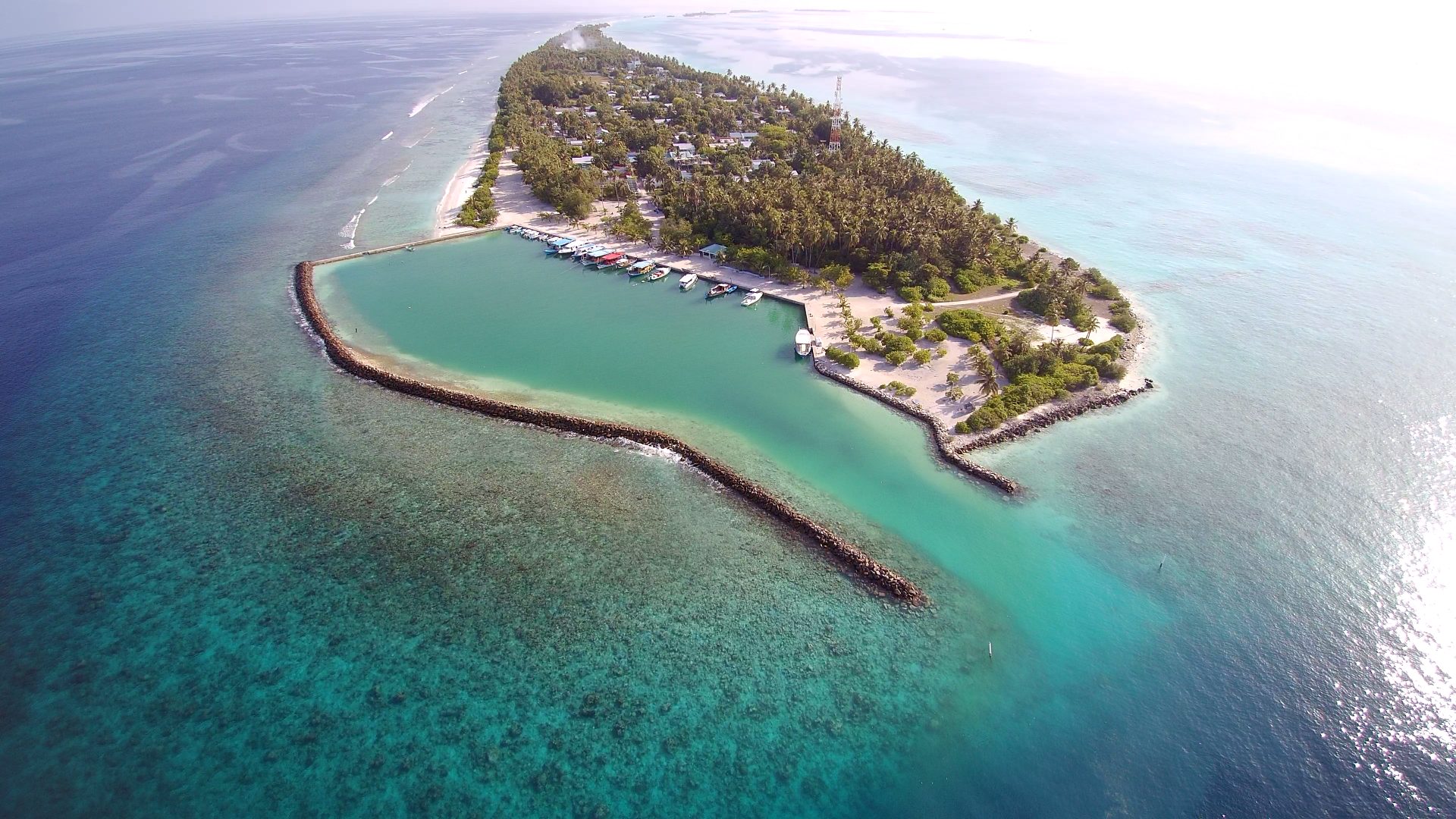
The local Dhiveki language refers to Dhigurah as Long Island – and so it is called. Dhigurah in the South Ari Atoll is 4 kilometers long, and one of the most visually picturesque local islands in the Maldives, and one of the most rewarding in encountering the sea.
The island lies on a Marine protected area and is recognized internationally as one of the surest spots on the planet to see whale sharks all year long. These are not rare occurrences, there are regular special morning whale shark tours that take place and the possibilities of an encounter are very real. Whale shark sightseeing costs between 60 and 90 dollars.
Towards the end of the island is a magnificent 2-kilometer sandbank that ends at low tide towards an adjacent luxury resort. You can stroll it, have photographs that appear to cost a fortune to have, and encounter the type of theatrical Maldivian landscape that devotes most of the travel magazines. It only requires access to the island without cost.
Dhigurah also has the longest Bikini Beach on the entire local islands – which is about 2km. This provides the travelers with the true space and privacy unlike the smaller specific beach sections on busier islands. It is possible to walk far enough along the beach and feel totally alone, something you can hardly feel in a tourist destination.
In addition to the whale sharks, the waters at Dhigurah are also good sites of the manta rays (especially in January to April), sea turtles, and dolphins. The mixture of the marine life is outstanding even according to the Maldivian standards.
The island is also more distant to Malé than North Atoll solutions – the public ferry ride takes 6-7 hours and is only twice a week, whereas a speedboat costs 2-2.5 hours and $50-80 per person. You should include this in your schedule. This is because of the additional travelling time, and Dhigurah has never been over crowded as compared to the other alternatives which are closer.
Dhigurah Price Guide (Estimated 2026)
| Category | Estimated Cost (USD) | Notes |
|---|---|---|
| Accommodation | $60–$200+ / night | Bliss Dhigurah (~$138), Whaleshark Beach (~$164) |
| Whale Shark Tours | $60–$90 / person | Specialized morning trips, year-round availability |
| Meals at Local Cafes | $10–$25 / meal | Café Dune and similar local spots are affordable |
| Public Ferry from Malé | ~$5 / person | 6–7 hours; runs twice weekly only |
| Speedboat from Malé | $50–$80 / person | 2–2.5 hours; the recommended option |
Photography note: The 4km long and dramatic sandbank of Dhigurah is a great source of both aerial and ground-level photo compositions that can be seen as iconic in any given local island. This island will be worth the additional trip should you come with a camera.
8. Rasdhoo – Hammerhead Sharks and World-Class Diving on a Budget
Best for: Divers, solo travelers, marine life enthusiasts, travelers wanting a quiet dive-focused base
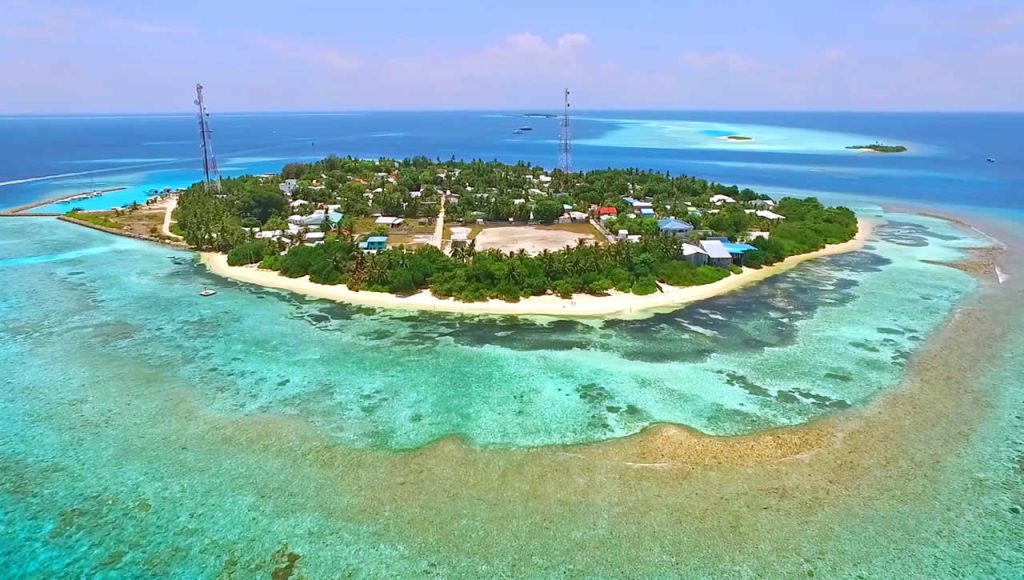
Rasdhoo is the administrative capital of the North Ari Atoll and one of the smallest, walkable, and diving local islands in the Maldives. It is about 0.5km long and 0.4km wide – small enough to traverse the whole island in one afternoon on foot – and yet on a site entirely enclosed around by some of the most astounding dive sites of the entire country.
The surrounding sea of Rasdhoo is also inhabited by hammerhead sharks, manta rays, eagle rays, sea turtles, and various systems of coral reefs. The island has over 23 dive sites that are available, which include shipwrecks and caves of rare black corals. This is actually an extraordinary underwater experience concentration in a very limited geographic location to divers.
It has a very pretty harbor too, peculiar to the island. In the fish cleaning station at the jetty, scraps attract nurse sharks and stingrays which take up numbers near enough to be viewed using the dock- no snorkel or boat is needed. The type of experience that characterizes the best local island destinations is the kind of low-effort high-reward experience.
The Rasdhoo based dive centers are reputable. Family Divers Maldives – The company has good ratings in regard to a shark diving and professional qualifications. Drop Dive Maldives is an SSI training facility with different languages. Jerrys Dive Club is among the oldest shops on the island, which produces Nitrox fills. They are both types of divers, a beginner to an advanced one.
Dolphin watching, night fishing and sunset cruises are some of the island excursions offered to non-divers in the island. A tiny art gallery – One Reef Art Box – introduces the element of culture that does not seem to be artistic or artificial.
Rasdhoo is a little bit further than Malé than the North Malé Atoll islands and the speedboat ride is approximately between 1 and 1.5 hours, at a cost of 35 and 45 dollars respectively. The route 303 is a budget public ferry which operates on Mondays and Thursdays and costs approximately 4 dollars and takes approximately 3 hours. The distance is compensated quite easily by the quality and diversity of underwater locations to divers.
January to April is the most ideal time to dive and the weather is good. The peak season of the manta rays is between November and April. When you are visiting the marine animals, you should plan at the right time.
Rasdhoo Key Information
| Category | Details |
|---|---|
| Speedboat from Malé | $35–$45 / person (1–1.5 hours) |
| Public Ferry (Route 303) | ~$4 / person (3 hours; Mon & Thu only) |
| Dive Sites Available | 23+ sites including wrecks and caves |
| Best Time to Visit | January–April for diving; November–April for mantas |
| Notable Dining | Coffee Ole, Lemon Drop, Icoco (local, Asian, Western) |
| Guesthouses | Under $50/night available; compact island, easy walking |
Quick Comparison: Which Island is Right for You?
| Traveler Type | Best Island | Why |
|---|---|---|
| Solo Traveler | Maafushi or Thulusdhoo | Social scene, cheap tours, easy island hopping |
| Couple (romantic) | Gulhi or Ukulhas | Quiet beaches, authentic vibe, fewer crowds |
| Family with Kids | Dhiffushi or Maafushi | Multiple beaches, kid-safe activities, good infrastructure |
| Diver | Rasdhoo or Fulidhoo | World-class sites, hammerheads, nurse sharks on shore |
| Surfer | Thulusdhoo | Cokes and Chickens breaks, beachfront access to waves |
| Eco Traveler | Ukulhas | Green Leaf Award winner, coral gardening, pristine reef |
| Wildlife Seeker | Dhigurah or Fulidhoo | Whale sharks year-round (Dhigurah); nurse sharks on shore (Fulidhoo) |
| Budget Maximizer | Gulhi | $1.50 ferry, $5 meals, under $50 guesthouses, bring cash |
Which Island is Best and Why – A Honest Island-by-Island Case
This is the question that nearly all first-time travellers visiting the Maldives local islands will pose. The answer to the question of what is the best island does not exist since all the islands have their own character. However, when you realize what each of them really has to offer, then the choice is a lot easier.
Maafushi is most fun when you want to have the least effort and the most convenient as well as the most variety to do it. It is the unquestioned tourist centre of local islands in the Maldives. Increased choice of hotel, increased number of tour operators, added variety in the dining choices and a connection rate at only $25-30 per person to the airport. It is the safest and most intelligent choice to start with in a case of the first time in the local island.
Dhiffushi is ideal, provided you do not have to struggle to get space at the beach. There are three distinct bikini beaches and this implies that there is a quiet place at all times regardless of the time of the day or the season. And by the evenings, stingrays and baby sharks come close to the shore with no booking and boat ride required. It is a real rarity to experience that type of hassle-free wildlife encounter.
Ukulhas is the most appropriate place to be in case you would wish to save on daily boat tours to snorkel. The house reef is located within meters of the beach and that ways you can walk in every morning and find yourself swimming with the turtles, manta rays and reef sharks without incurring expenses on an excursion. It is the most environmentally friendly option among the travelers who are eco-conscious in the Maldives.
Thulusdhoo is ideal in case surfing is the focus of your vacation. Cokes break can also be accessed without a boat right off the beach, which is impossible to do anywhere in the Maldives. The artistic nature of the island, vibrant murals, and cafe atmosphere along the beach will make it feel like it is a post that is unmatched by any other local island.
Fulidhoo is the best in case you prefer to be isolated and have the best in terms of marine life. Remaining in a place with just 200 people, observing a Bodu Beru drum show, and snorkeling among nurse sharks directly on the beach is an experience that would not be able to occur under a large environment.
Gulhi is the most appropriate, in my opinion, when it comes to the real experience at the cheapest price possible. A ferry of one and a half dollars, five-dollar meals in town, and single rooms costing less than fifty dollars per night are quite an argument in themselves. The island is easy to walk in 10 minutes and this implies that internal transport is free. It is arguably the least expensive local island in the Maldives.
Dhigurah is the best one to visit in case a whale shark is on your bucket list. There are hardly any whale sharks sightings in the year round that could be counted on and Dhigurah is one of them. A 2km sandbank, a 2km bikini beach and you have more space, more privacy than any other local island on this list.
Rasdhoo is ideal provided you are a serious diver and would like to visit more than 23 dive sites in one base on an island. And manta rays, eagle rays, all in a single location. The island is small such that all things can be walked to and the dive centers at the island are of international standards.
How to Choose an Island Based on Your Budget – An Honest Breakdown
The biggest mistake most of the travelers make as they plan a Maldives local island trip is by simply glancing at the guesthouse rate per night. However, the actual daily expenses will be determined by a combination of accommodation, food, transport and activities. A breakdown of the size of each island that is the most valuable on four budgets per day is presented here.
Gulhi or Fulidhoo are your best bets in case you do not want to spend more than 60-80 a day. In Gulhi, the ferry between Malé and the rest of the island costs only $1.50, which can be considered transport insignificant. Guesthouses can be found at less than 50 a night. A local cafe meal runs around $5. On a non-excursion day, it is actually a possibility to spend less than $60 in getting through the whole day. Fulidhoo does not differ, as guesthouses begin with 40 dollars, meals in the cafe of Dream Hut cost 10-15 dollars and the experience with snorkeling among nursery-school sharks, when staying at the shore, occurs free of charge.
In case you have a comfortable budget of between 80-120 a day, then Maafushi or Thulusdhoo will be the best choice. On Maafushi, a guesthouse that costs $50-60, two course meals that cost between $10-20, and a single snorkeling adventure between 25-30 can easily cost one less than 120 dollars. In Thulusdhoo, the local ferry is only $2-3, guesthouses begin at 45 and dishes cost 5-15, so it is also equally manageable even when one is not there to surf.
With a budget amounting to $120-150 per day, Ukulhas or Dhiffushi has a significantly high-end local island experience. In Ukulhas there are boutique beachfront hotels that are priced at $110-200, however, on daily boat trips you save money as the house reef is a walk-in. The roads, and cleanliness are also much superior when compared to lower priced islands. In Dhiffushi, resorts such as Stone Hotel reach a point of 250 USD, yet again, at the other end of the scale, resorts like Bibee Maldives are still able to offer a good experience.
Whichever island you are going to, one trick always proves money-saving: book a place on Booking.com or Agoda, but then communicate with the guesthouse via email or WhatsApp. The vast number of properties will provide a 20-30 percent discount on direct bookings as a way of not paying platform commission. The saving can be used to cover an additional field trip or two.
| Daily Budget (USD) | Best Island Choice | What You Get |
|---|---|---|
| $60 – $80 | Gulhi or Fulidhoo | Cheapest ferry, $5 meals, under-$50 guesthouse, free marine life from shore |
| $80 – $120 | Maafushi or Thulusdhoo | Good guesthouses, variety of tours, affordable daily excursions |
| $120 – $150 | Ukulhas or Dhiffushi | Better infrastructure, premium guesthouses, multiple beaches, house reef access |
| $150+ | Dhigurah or Rasdhoo | Whale shark tours, world-class diving, long private beach, specialist marine experiences |
The Best Island for Solo Travelers, Couples, and Families – Separate Recommendations for Each
These three traveler types have fundamentally different needs, and choosing the wrong island can genuinely diminish the experience. Here is each category broken down honestly.
Best Islands for Solo Travelers
Safety and ease of access is the most important when travelling solo and a social atmosphere where one can actually come across other travellers. The best between the two, by far, is Maafushi, which is the best option among solo travelers.
Maafushi receives a significant number of solo travelers at any period of time. Tour groups are frequent, dive shops are able to run group snorkeling and diving tours, and the nightlife provides the opportunity to socialize in a way not available in any other local island. The airport is only 30 minutes away, guesthouses begin as low as $30 a night, and is an ideal starting point when it comes to island hopping as a destination since it is easy to connect her to the rest of the islands.
Thulusdhoo is also a good option to the adventure-oriented solo traveler. The surf community is inherently social and Cokes break is a gathering event that brings people together, the artistic spirit of the island and the cafe culture is the key leading to an interesting crowd. You should not worry that you are alone as a solo traveler.
In the event that you are seeking a lower-key free experience, some time off yet with secure and trustworthy infrastructure surrounding you, Ukulhas would be a good fit. The Guest House employees are rated helpful, implying it is possible to walk anywhere on the island, and solo snorkeling on the house reef is truly serene.
Best Islands for Couples
Travelling couples would focus more on three aspects including privacy, romantic atmosphere, and experiences worth sharing. They are all present in Maldives local islands, though their level differs greatly on one island to another.
Gulhi is a truly romantic option of couples. There are good sunset viewing points at the beach, and it is simple to get in the lagoon alone, and the island is small enough that two individuals can walk all over it in one afternoon. Due to the reduced number of tourists, it is easier to locate your own piece of beach compared to the other overcrowded islands.
Ukulhas is also highly suggested to couples particularly those couples who need to have a nature experience. Seeing turtles in a group, snorkeling by manta rays and the environmentally-friendly feel of the island make the experience a valuable shared memory that a hotel will never be able to achieve quite as successfully.
Lovers that desire complete privacy will be pleased with Fulidhoo. Not a single car, not a motorbike, not a crowd. Snorkeling with nurse sharks, body dancing to a Bodu Beru performance, and making one walk through the small village streets builds a coziness that is hard to find anywhere one travels to.
Dhigurah is also a good alternative to couples as the 2km long bikini beach is also very strong and the couples find it easy to have some privacy as compared to most of the local islands. The act of going to a whale shark tour as a group makes it a bucket list experience.
Best Islands for Families
The family travel demands safety of children, good infrastructure in the island, and a sufficient degree of activity that will ensure all remain kept busy. All things considered, the most feasible family option in this list is Maafushi.
Maafushi also has family guesthouses that come with bigger rooms and the option of connecting rooms. Cruises on dolphins are ever selling among children. Snorkeling tours are conducted in the shallow waters and therefore acceptable to children. The location has shopping, a pharmacy and a sufficient number of restaurants that the minor logistical issues of traveling with a family can be handled in this location.
The second best option is Dhiffushi, which is a good family option. There are 3 bikini beaches which imply that there is always a place where children play in the water. The island itself is small such that children can not go lost easily. And the stingray views of the evening seen on the land are the sort of unexpected magic which children do not forget quickly.
Ukulhas especially suits well with families having older children. Having a turtle on the house reef makes a permanent impact on children. The eco-friendly culture of the island provides children with natural setting of learning the ocean environment. The snorkeling of the family is safe and accessible in the calm, shallow waters surrounding the island.
Which Islands Are Closest to Male – Transport Time and Cost from the Airport
The distance between the airport and destination is not all about time in Maldives travel. It has a direct influence on your budget of transportation. A seaplaning domestic to a distant exclusive resort may cost 200-400 per head in one way only. This is not done in local island travel, but even in local islands the transport cost and distance difference differ rather substantially. The following is the list of all islands in this list sorted in descending order of their proximity to the Velana International Airport.
The nearest one is Maafushi, which can be accessed within 30 minutes after landing in the airport by the speedboat. A common speedboat is between 25-30 per person. The shared boat costs $3 and is about 90 minutes. This is by far the most viable option in case you have a tight layover or are going on a short trip.
And Thulusdhoo is also located in the North Male Atoll and is only 27km away to the Male. Speedboat takes 30 minutes at $25-30. The ferry fare is 2-3 dollars and the time is 1.5- 2 hours. In case you wish to hop, Thulusdhoo offers ferry service to Dhiffushi and Huraa so that the entire area will become malleable to cover without the need to spend a hard earned money on high-speed boats every time.
Gulhi is located in South Male Atoll, which is 21km south of Male. Speedboat takes 25-30 minutes at $30. However, the biggest transport on Gulhi is the ferry that costs only a dollar and fifty or sixty, approximately 80 minutes. It is one of the cheapest connections of the islands in the whole of Maldives.
Dhiffushi is in the North Male Atoll, and a speedboat ride would take 45 minutes at 35-40 dollar an airport. The water taxi will cost 1.50 and take approximately 3 hours. Provided budget is of the order, the ferry is a good choice, although it is important to check the schedule of departure beforehand since the ferry is not operating on a daily basis.
Ukulhas is further Northern in Ari atoll. The airport speed boat will cost between 60-90 minutes and cost 50 each way. The Cuzco ferry is $4, which is time consuming (lasting over 4 hours) and only operates on a few days of the week. The increased travel time and expense is the sacrifice to the unique house reef and marine life in the island.
Fulidhoo is located in Vaavu Atoll, 57km away, Male. The commuter speedboat takes 1.5 hours and costs 40-45 each day. The regular ferry costs 4 dollars and it will take 3.5 hours although it operates only 3 days a week. Such a ferry timetable must be calculated before the engagement to this island.
Rasdhoo is located in North Ari Atoll. Speedboat takes 1-1.5 hours at $35-45. The regular ferry ( Route 303) is priced at four dollars and requires 3 hours with limited service on Monday and Thursdays only. To divers, this trip is well justified by the quality of the destinations in this location.
The furthest choice on the list, which is found in the South Ari Atoll, is Dhigurah. It takes the speedboat 2-2.5 hours and costs between 50-80 dollars per person. The city ferry costs 5 dollars but is en route during 6-7 hours and it operates once a week. It is precisely that distance that makes Dhigurah less congested than North Atoll islands, and to many people that is the bottom line.
| Island | Speedboat Time | Speedboat Cost | Public Ferry Cost | Ferry Time |
|---|---|---|---|---|
| Maafushi | 30 min | $25–$30 | ~$3 | ~90 min |
| Thulusdhoo | 30 min | $25–$30 | $2–$3 | 1.5–2 hrs |
| Gulhi | 25–30 min | $30 | $1.50–$2 | ~80 min |
| Dhiffushi | 45 min | $35–$40 | $1.50 | ~3 hrs |
| Ukulhas | 60–90 min | $50 | $4 | 4+ hrs |
| Fulidhoo | 1.5 hrs | $40–$45 | $4 | 3.5 hrs |
| Rasdhoo | 1–1.5 hrs | $35–$45 | $4 | 3 hrs |
| Dhigurah | 2–2.5 hrs | $50–$80 | $5 | 6–7 hrs |
Where to Book Your Maldives Local Island Trip – A Complete Guide from Guesthouse to Speedboat
It is no wonder that all the reservation offers of Maldives local islands become confusing. The different platforms have different prices and the correct strategy will depend on the island you are visiting and the mode of transportation use. Here is what actually works.
For Guesthouse Bookings
The largest amount of Maldivian local island guesthouses is covered by Booking.com. There is good selection in all the major islands such as Maafushi, Ukulhas, Dhiffushi, Thulusdhoo and Fulidhoo. Browse with a filter of free cancellation since plans in the Maldives may change due to the weather or ferry boat times and flexibility does not cost anything.
Agoda also has a high presence in Asian travel destinations in general and Maldives local islands in particular. Among others, it is worth comparing the same property in Booking.com and Agoda before booking since there are cases where the rates can vary significantly across the two sites.
TripAdvisor is of less use in making a booking as compared to research. Reviewing of the latest guest reviews about a guesthouse is a wise thing to do and TripAdvisor is likely to bring to light genuine reviews which the official listing of the property would not reveal.
The most intelligent part about it is to locate your desired property at Booking.com or Agoda and contact the guesthouse directly either by email or via WhatsApp. Most of the properties will be providing a 20-30 percent discount on direct booking to eliminate paying the platform its commission. That is a lot of saving in the case of a multi-night stay.
For Speedboat Bookings
Bookaway.com is the one that will be the most trusted place to compare the schedule and pricing of Maldives speedboats across most operators. The confirmation of the booking is immediate and the coverage is good in the flight to the North and South Male Atolls.
Alternatively, Halamaldif.com is also a reliable source especially in North Male Atoll connections. It is effective in the islands such as Thulusdhoo and Dhiffushi.
In the specific case of islands in the North Male Atoll, the Odi app is universally popular on both the sides of the locals and tourists. Their team is also available on WhatsApp at +960 9920022 to check the schedules and confirm the bookings.
Airport transfers are organized by many guesthouses on their own. Enquire in the room booking whether the establishment has or can provide airport transfer. Many guesthouses provide it at no cost or at a reduced charge especially when staying three nights or more.
For Public Ferry Schedules
The national public ferry system is run by MTCC (Maldives Transport and Contracting Company). Their web site will have the up to date schedule, but it is inadvisable to look at one nearer to your travel date since ferry schedules are seasonal.
One essential planning observation: on a number of islands there are regular ferries of the public, though the number of crossings is limited to two or three days in a week. Fulidhoo is serviced three days per week, Dhigurah twice per week and Rasdhoo (Route 303) two days of the week. Take into consideration the timetable of arrival and departure dates. Being stuck on an island due to the non-function of the following ferry over two days is a scenario that exists in reality and can be prevented.
For Tour and Excursion Bookings
Considering the tours and excursions in most cases, it is best to book them in the island after arriving and get better deals than booking them on an online platform. Snorkeling tours, dolphin watching, sandbank tours and diving are all available locally and skipping the online markup is a cost that is cumulative over a course of several days.
The only exception is that in high season, especially in December to April. Other attractions such as Dhigurah whale shark tour and Rasdhoo hammerhead shark dive are popular and book up in advance during the high season. In the case of those particular experiences, the convenience fee is actually worth paying.
Card machines are not always reliable in smaller local islands, a practical tip on cash. There are no ATM in some islands such as Gulhi. In Mandarin, you should withdraw sufficient USD cash before departing Male so that your stay is comfortable. This is easy since USD is readily accepted in most guesthouses.
Final Thoughts: Is Local Island Travel in the Maldives Worth It?
No doubt – no doubt not when you realize what you are really getting.
The Maldives private resort islands are unique and special experiences, only that they are enclosed by high walls at a price that literally leaves most travelers out. Local island tourism was constructed with the sole aim of transforming that. The identical water and white sand, the identical coral reefs and sea creatures – available at a fraction of the cost of $40 to $80 per night rather than $1,000 to $3,000.
This list of islands has something different to offer. Maafushi will provide the utmost convenience and choice. Dhiffushi offers thee three beaches and rest. Ukulhas is friendly, reef-right-from-shore and environmentally-aware. Thulusdhoo provides you with waves and street art. Fulidhoo provides you with nurse sharks and quietness. Gulhi provides you with a sense of exploration. Dhigurah will provide you with whale sharks and longest beach. Rasdhoo provides you with the best diving in a small portable size.
Not one of them needs a seaplane. They all do not need a travel agent. Each of them can be booked directly via the proven platforms and guesthouses that are actually delighted to host you.
The Maldives is paradise as it has always been. Price barrier to get to local islands was simply removed.
Have you ever been to any of these native islands? Your experience is discussed in the comments. And in case this guide was useful in making your travel plans, you can save it or share it – it could also assist another low-end traveler in getting to the Maldives.
See More
- Top 10 Luxury Resorts Near Maafushi (No Seaplane Needed) – Complete 2026 Guide
- Top 10 Best Things to Do in Gaafu Dhaalu Atoll – Complete Travel Guide
- Best Things to Do in Addu Atoll Maldives: Diving, Islands, Nature & Local Culture Guide
- Best Luxury Resorts in Addu Atoll Maldives: Features, Prices & Why Stay
- Best Five Star Luxury Resorts in Laamu Atoll Maldives: Prices, Features and Why to Stay