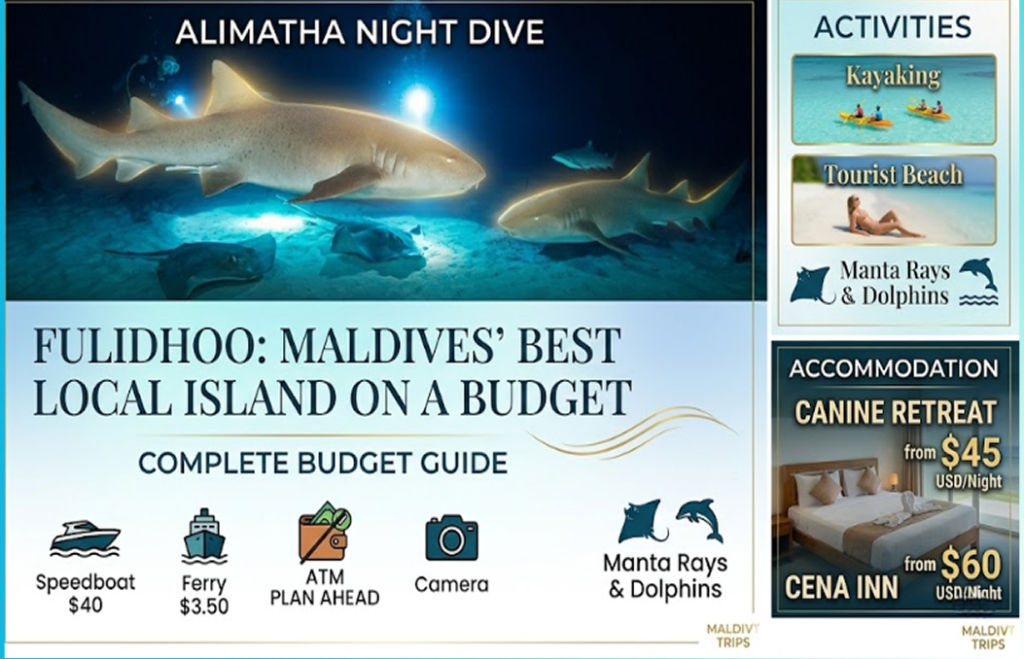
The Laamu Atoll is the place to visit in the Maldives when seeking the experience of completely unspoiled islands. Haddhunmathi Atoll is officially referred to as the Haddhunmathi Atoll bearing in mind that it is considered as one of the cleanest least commercialized areas in the country. Laamu is a place that is silent and remote unlike the busier north atolls and is firmly rooted in the natural and cultural heritage of the area.
Laamu Atoll is unique due to its secludedness. The atoll is accessible by domestic flight of Velana international airport in Malé to Kadhdhoo Airport, and subsequently it takes a short ride by speedboat or taxi. The duration of the flight is normally 35 to 60 minutes. The added advantage of this further restricts the extent of mass tourism and environmental pressure which is one of the leading factors as to why Laamu Atoll snorkeling, scuba diving, dolphin tours, and sandbank tours are regarded as the best in the Maldives.
Laamu Atoll Maldives – Top Things to Do
Future-wise, one of the most rewarding destinations to visit in 2026 in the Maldives is the Laamu Atoll, in case you are seeking a destination that can still be considered untouched. This southern atoll is the only place where people can readily find a balance between thriving marine life, the authentic island culture and sustainable tourism practices, which makes it unique compared to the more commercialized parts of the area.
Visitors to the Laamu Atoll will be provided with the best snorkeling and scuba diving experience where the coral reefs are a lively habitat and the marine life is in abundance. Whether it is swimming with the manta rays at Hithadhoo Corner, or channel dives such as the Fushi Kandu, underwater experience at this place is one of the best ones in the Maldives. Its still lagoons and visibility also afford beginners, whilst the experienced diver can still have exciting drift dives with reef sharks, eagle rays as well as big masses of fish.
Other memorable ocean activities at Laamu include dolphin tours, in which huge groups of spinner dolphins may be spotted dashing around putting on circus-like tricks, particularly at sunset and dawn. It is also associated with the high conservation levels taking place in the atoll, which makes sure that the experience of wildlife is ethical and sustainable. Tourists usually get a direct opportunity to know the marine biologists so that every outing is enriched and enlightening.
Laamu Atoll on land is a different cultural experience that can hardly be found elsewhere in the Maldives. The Gan-Fonadhoo-and-islands road that connects to the islands enables tourists to study local culture, traditional arts, and historical places including ancient Buddhist ruins. This bondage between islands introduces an even more engulfing experience of a combination of nature and cultural exploration.
The secluded sandbanks and the deserted islands in the atoll provide the maximum privacy to those who want to relax. Be it a picnic on a beach, paddling along in the lagoons of turquoise, or just gazing at the sunset on the Indian Ocean, at all times you will have a feeling that Laamu is serene and untouched. It is also one of the most suitable places to stargaze in the Maldives because of the absence of light pollution.
The identity of Laamu is wellness and environmentally friendly tourism. Resorts are dedicated to complete experiences such as yoga, spa and green living. The programs with the focus on the coral restoration, turtles protection, and zero-waste will help visitors to relate to nature in a valuable manner.
All in all, Laamu Atoll is not about a place, rather it is an experience characterized with nature, culture and sustainability. It is one of the most unusual and unforgettable atolls to visit in case travelers decide to plan their trip to the Maldives in 2026 to have a perfect adventure, relax, and be authentic in it.
Snorkeling & Scuba Diving in Laamu Atoll
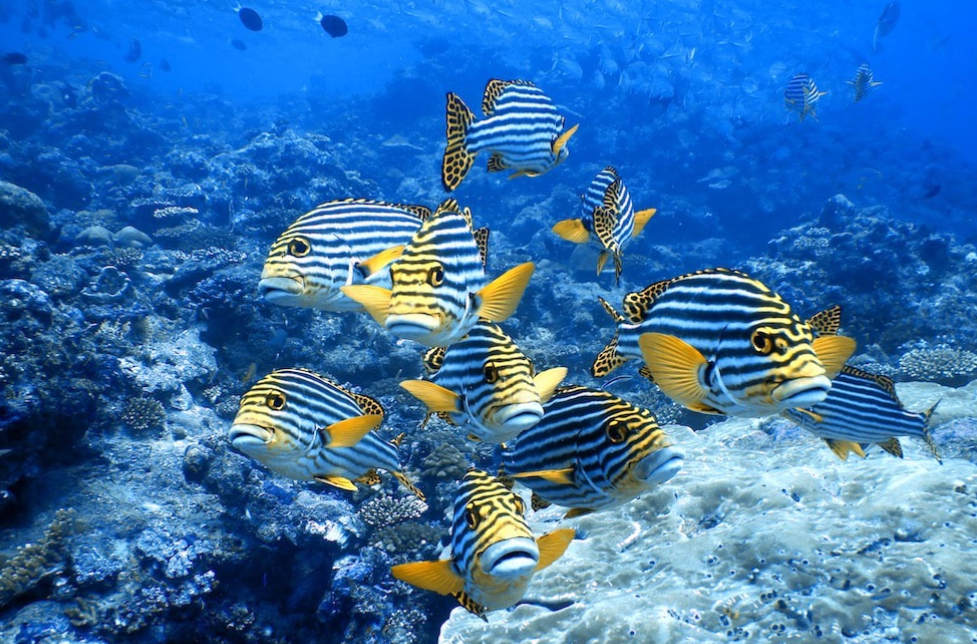
The Laamu Atoll snorkeling is considered to be of world class because of the high distance and conditions of the coral reefs. The reefs of Laamu have been spared in many ways compared to other parts of the Maldives that have been severely affected by coral bleaching but the underwater scenery there is still very colourful. The seagrass meadows and mangrove forests are extensive ecosystems with dynamic habitats and are sustaining many marine species.
Snorkeling right off the beach usually results in close encounters with green sea turtles, reef sharks and eagle rays. The water is clear and in dry season between December to April the underwater visibility is as much as 30 meters. Such serene activities render it a perfect season both to novice and seasoned snorkelers to visit Laamu atoll marine life.
The scuba diving in Laamu Atoll is also very attractive. The atoll has minimal channels as compared to other Maldivian atolls which usually lowers the power currents and enhances visibility. This renders numerous diving locations easy to novice divers and at the same time provides adrenaline pumping drift dives at the same time in the north channels to the advanced divers. Biodiversity is outstanding and the number of fish species that have been identified in the region is more than 1,100. Divers may be subjected to grey reef sharks, whitetip reef sharks, eagle rays, Napoleon wrasse, giant potato groupers and some rare macro species like ornate ghost pipefish.
Hithadhoo Corner is one of the finest diving reefs in the Laamu Atoll. This site is at the southern point of the atoll and it is also referred to as Manta point. It is also renowned because it has running manta ray cleaning stations which the manta rays visit all year long. These large animals are often seen by divers flying above the coral heads with smaller cleaner fish eliminating parasites. Besides manta rays, one can also find plenty of large groupers and Napoleon wrasse in the area.
Another tourist attraction site is Fushi Kandu which is a Marine Protected Area. It is a prime channel dive and as a result of its vast biomass, it is more often than not called Fish Soup due to the high density of barracuda, eagle rays and whitetip reef sharks within a single drift. The currents are stronger here and this can be of great interest to seasoned divers.
The turtle haven is named Bella Thila, which is close to the Gan Island. Green sea turtles are attracted to healthy coral gardens; hence, it is a calm and fulfilling place to dive. Baresdhoo Faru is a totally different underwater and is commonly referred to as a macro wonderland. It is particularly interesting to underwater photographers in search of nudibranch, shrimp and the leaf fish. Maamendhoo Giri boasts of massive table coral structures and parrotfish schools which form an impressive and extensive reef structure.
In case of accommodation, there is only one luxury resort in the atoll, Six Senses Laamu, which also has an amazing house reef, a few meters near the beach. Tourists are able to snorkel off the beach and go on guided marine tours. Reveries Diving Village is located on the Gan Island and is a boutique-style accommodation that has constant access to a house reef, hence, making it a favorite amongst serious divers.
Dolphin Cruises & Ocean Wildlife Trips in Laamu Atoll
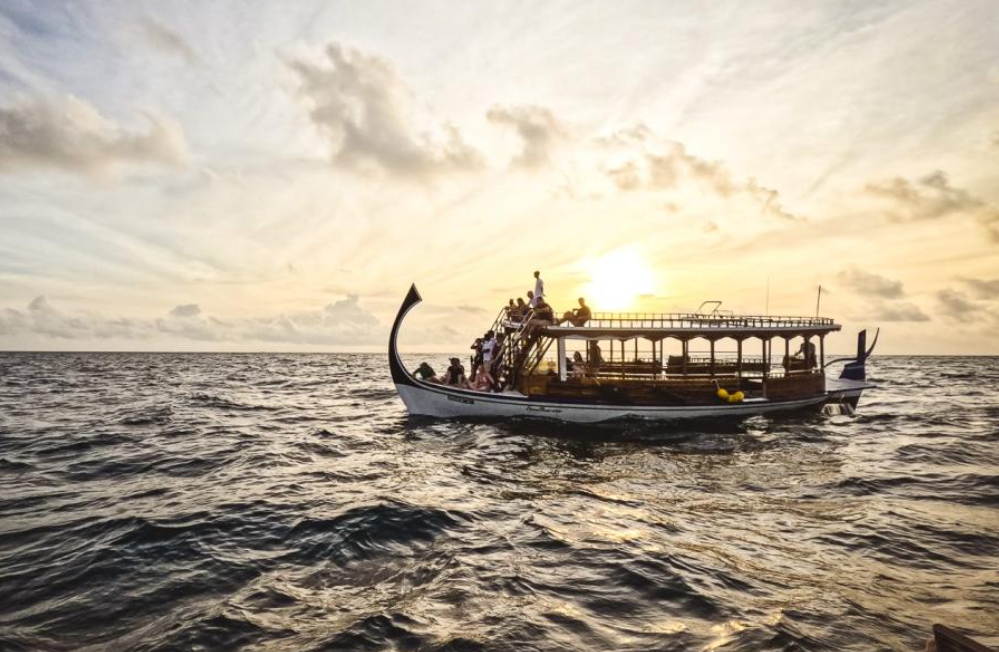
The dolphin cruises in Laamu atoll have been regarded as the best due to the availability of expected dolphin migrations and the conservation regulations that are highly maintained. The spinner dolphins travel in large pods and they have a daily schedule of going into the lagoons within the atoll to rest in the morning and going out to sea in the evening at sunset to feed. These dolphins are known to perform aerial acrobats and they are usually seen in the group of hundreds.
There are also the bottlenose dolphins found in the area, which are more inquisitive. They are at times observed close to snorkeling parties. Its central lagoon is deep and the channels are narrow, which gives the atoll a special habitat that supports the large pelagic and smaller reef life.
Laamu initiated the first Dolphin Watching Code of Conduct in the Maldives. The minimum distance that is maintained by boats is 50 meters and no chasing or cutting off pods. Marine biologists guide many excursions and offer educational support and collect research information during trips. This is an ethical practice that will see wildlife interactions are sustainable.
Manta rays at Laamu atoll clean up at Hithadoo Corner. Manta rays may be observed all year round, but the most frequent are observed during May-November. Laamu is also recognized as an essential destination in terms of wildlife including sea turtles. Green and hawksbill turtle nests on the islands like the Olhuveli, where the nesting season is between March and July and the hatchlings appear between May and August. During the month of July to October, tourists can see turtle hatchlings heading to the sea under the guidance of conservation teams.
Island Hopping & Local Culture in Laamu Atoll
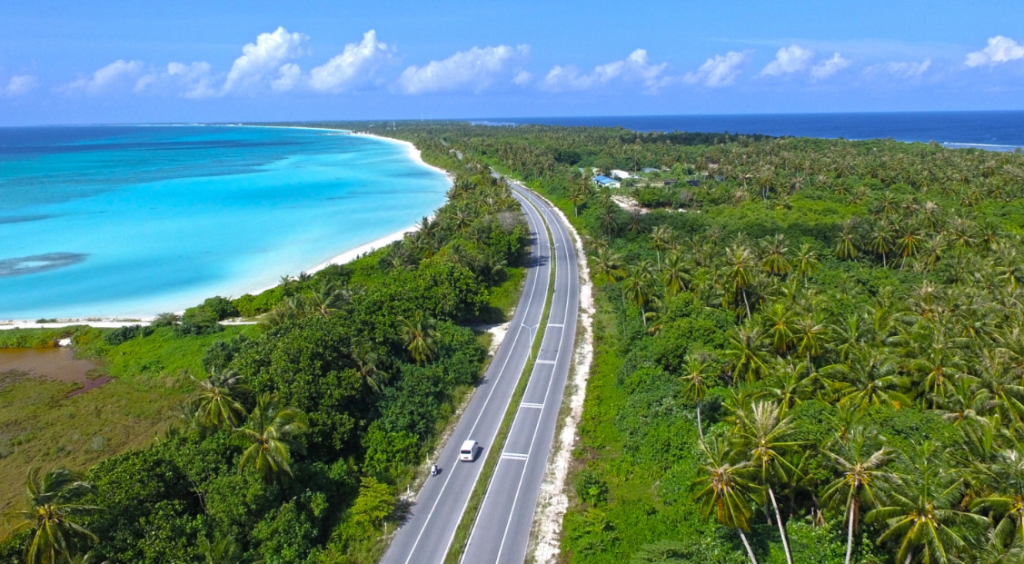
Laamu Atoll hopping is a unique experience where one gets a chance to have a glimpse of the true Maldivian living. In contrast to other atolls where the cartography is determined solely by boat transfers, Laamu has the longest system of island-connecting roads in the country, an 18 kilometer causeway network between Gan, Maandhoo, Kadhdhoo and Fonadhoo. This is a road that can be traversed by scooter, bicycle, or car and is a distinct land-based traveling experience in the Maldives.
Gan Island is of historical importance and there are old Buddhist ruins as well as pre-Islamic stupa named Gan Hawitta. This location is an indicator of the transformation of the atoll of its Buddhist history towards the current Islamic culture. The Fonadhoo Friday Mosque is another good example of the continuity of the culture in the region.
It is possible to see traditional boat-building areas, local schools and community offices by the visitors that visit inhabited islands like Fonadhoo, Maamendhoo, and Hithadhoo. Cultural experiences Cultural immersion activities could involve attendance at workshops devoted to Kasabu Viyun metallic thread weaving or mat weaving. Local food also presents foods like Golha Riha, fish ball curry, and Mas Huni.
Island hopping also involves natural exploration in Laamu. Paree Fengandu on Gan is a fresh water lake commonly referred to as being bottomless. The name Baresdhoo Island was famously discussed as the filming place of planet Scarif in Rogue One, and this has provided another unexpected pull in the atolls, which is the least cinematic link.
Sandbank Picnics & Beach Relaxation in Laamu Atoll

The Laamu Atoll sandbank picnic activities are generally considered to be one of the most isolated in the Maldives. There is very little tourist infrastructure and lots of deserted islands creating scenarios when people are entirely alone on pieces of white sand. There are numerous sandbanks in sheltered lagoons that have calm turquoise waters where one can swim and snorkel.
A few of the sandbanks around Six Senses Laamu can be reached within a brief boat ride or even kayak. On top of sandbanks which are temporary, the atoll has 49 uninhabited islands on which full-day beach experiences can be organized. These also feature ready prepared barbecues and snorkeling in the surrounding waters that are rich in corals.
Sustainable management of the beaches ensures that they have a natural condition. The sand is fine and cold and there are no big constructions on the land that augment the feeling of seclusion. Direct snorkeling off the beach often leads to the observation of green turtles, reef sharks and eagle rays which are backed up with large areas of undisturbed seagrass meadows.
The nights in Laamu Atoll are very stunning in terms of sunset and star gazing. It is due to the absence of light pollution in this remote southern atoll that the night skies are clear and this contributes to the overall ambience of tranquility.
Wellness & Eco Experiences in Laamu Atoll
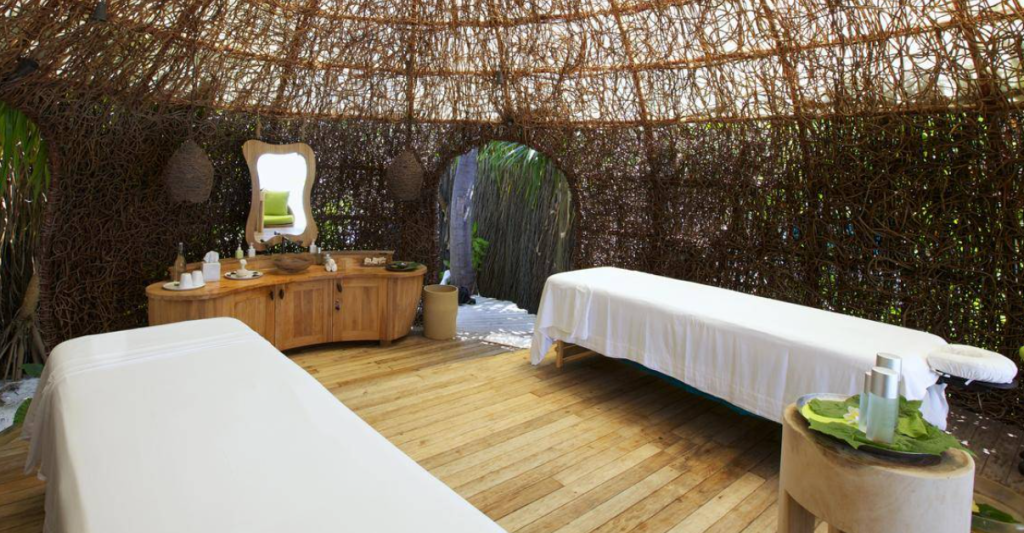
Laamu Atoll wellness retreats are based on slow travelling and relaxation. The atoll does not focus on the high-energy activity programs but advocates digital detox and mindful experiences. Six Senses Laamu has three, five, and ten-day holistic spa retreats, with Ayurvedic therapies, wellness screenings, and biomarkers.
The outdoor rooftop yoga classes have aerial yoga and power yoga with visiting practitioners. Sleep With Six Senses program focuses on better sleep quality achieved with the help of environmental modification and professional examination. The Rahaa and Evexia Beach Collection resorts offer sunrise yoga and seaside meals which revolve around localized dishes which are fresh.
In Laamu, eco experiences are highly embedded in the everyday life. Sea Hub of Environmental Learning, in Laamu enables the guest to come into direct contact with the marine biologists working on their project of restoring corals, protecting seas grass, and researching the manta ray. The Earth Lab presents zero-waste programs, composting systems and water desalination facilities that are meant to solve the problem of plastic bottles.
Turtle nesting and hatching programs are seasonal activities with possibilities of helping conservation teams. Dolphin cruises and turtles safaris are low impact tours, which demonstrate the concern of the atoll to responsible tourism.
Best Time to Visit Laamu Atoll & Travel Planning
Snorkeling and island hopping in Laamu Atoll is better in the dry season which falls between December and April as the sea is calmer and visibility is at its best. The manta ray is mostly seen during May-November. The local flight nature provides an opportunity to spend a better part of five to seven days in order to enjoy the diving, dolphin swimming trips, Island hopping, sandbank picnics, wellness programs.
Modest dress can be encouraged including covering shoulders and knees, and observing the Islam tradition, particularly on Friday prayers when visiting the local islands.
Is Laamu Atoll Worth Visiting in 2026?
Laamu Atoll has one of the most balanced experiences in the Maldives with its clear coral reefs, regular dolphin migrations, ethical animal interactions, cultural experiences, remote sandbanks, and sustainable luxury to the travelers who want that. Isolated geography prevents degradation of its ecosystems, its Link Road brings the rare on-land exploration, and its conservation-first ethos makes sure that the marine life flourishes.
The nightlife and massive development do not characterize Laamu Atoll. Rather it can be characterized in terms of preservation, biodiversity and authenticity. It’s either manta rays at Hithadhoo Corner, or turtle hatchlings under conservation education, road trips between the islands connected together, or just silent stargazing on deserted beaches, Laamu makes every moment count and has sense.
When it comes to best activities in Laamu Atoll Maldives, this is one of the most spectacular and pristine places in the country in 2026.
See More
- Best Things to Do in Thaa Atoll Maldives 2026: Pristine Reefs, Sandbanks & Authentic Culture & More
- COMO Maalifushi – Luxury Resort in Thaa Atoll Maldives (COMO Maalifushi Price 2026, All Inclusive, Water Villas & Surf Experience)
- Things to Do in Dhaalu Atoll Maldives in 2026: Ultimate Guide to Diving, Dolphin Cruises & Overwater Villas
- Luxury Resorts in Dhaalu Atoll 2026: Best Resorts, Prices, Experiences and Why Dhaalu Atoll Truly Stands Out
- Meemu Atoll Maldives – Top Things to Do & Why It’s Best For an Untouched Island Escape