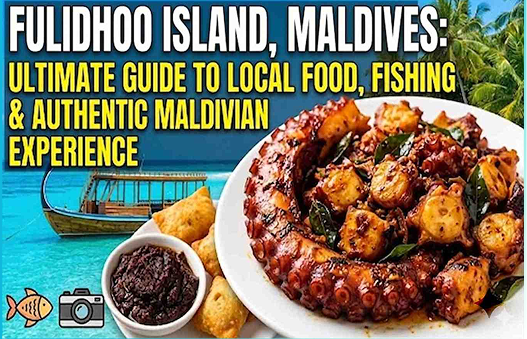
This is the actual food of the Maldives, far beyond resort buffets, with its batter and coconuts breakfast, scrummy tuna sandwich, and fat fish paste that the locals feast on daily.
The majority of the visitors to the Maldives spend the whole vacation within a resort eating international buffets that have a view of the ocean. And this may sound good, but they are missing out on something much better; what people in the Maldives eat on a daily basis.
The cuisine of the Maldives is based on two aspects; Indian Ocean fresh tuna and freshly grated coconut. The two ingredients appear in nearly all the dishes, in various forms, various preparations and combinations of the ingredients. What comes out is the food culture which is not only simple on the surface but also full of flavors and veritable unique flavor.
What to eat, where to eat, the culture and ethos of tea shops that have become a way of life, and even the particular dishes that will make you eat like a local are all addressed by this guide. You are either planning to visit or simply want to know what to eat in the Maldives, then you should read this.
Best Local Maldivian Food You Must Try
The Maldives is famous all over the world because of the turquoise waters, overwater villas, and exquisite beaches but the local cuisine is the actual taste of the islands. Maldivian food is basic but extremely layered in terms of flavor and it is structurally constructed on two ingredients that are used in virtually all meals; fresh tuna that is available in the Indian Ocean and freshly grated coconut. All these ingredients are mixed in myriads of ways to form meals which are not too heavy, gratifying and with a distinctive island touch.
To the majority of tourists, a resort will imply eating foreign buffet meals with oceanic views. Those meals are beautiful but they are not reflective of what the islands actually eat on a daily basis. And just by going into a local cafe or tea shop or a neighbourhood restaurant, one gets an ope into the world of the Maldives life and culture and cuisine. The cuisine of a local is not only the food but the time, customs and the society.
Begin your morning with Mas Huni, the famous Maldives breakfast of shredded tuna, coconut, onion, chili and lime combined with soft Roshi flatbread and a cup of sweet Kiru Sai (milk tea). This is an ideal mix of flavors, fresh and savory and a bit spicy with just enough lightness to get the day going. The dish is also prepared in many different versions basing on the island: Baraboa Mas Huni with pumpkin, Fai Mas Huni with local greens or Thaaro Mas Huni with ridged gourd, with a different twist and still keeping the flavors of the islands.
During lunch or dinner, a perfect dish to eat is Garudhiya, which is a clear broth of tuna working slowly over rice as it is customary, and topped with lime, raw onion, and green chili. Garudhiya is hearty and very simple food, but it embodies the flavors of Maldives home-cooked dishes. To have a more casual snack or afternoon treat go to one of the local tea shops, the Hotaa, and order a bite to eat, called Gulha, Bajiyaa, Masroshi, and Kulhi Boakibaa, and have it with a hot cup of tea. These salty and sweet snacks are the main part of the Maldives afternoon tea ritual known as Haveeru Sai, which brings maldivians together at a social level, and rejoices the new tastes.
A Maldivian food experience cannot be complete without trying Rihaakuru which is a sticky, strongly-seasoned tuna paste that is on the menu of every household. It is sometimes compared to Marmite or concentrated anchovy paste and it is consumed in small portions over rice or Roshi and gives it a very strong taste of umami which is savory and provides centuries of island cuisine.
In addition to those staples, the Maldives is also a location filled with fresh seafood items such as Fihunu Mas (grilled fish with Maldivian spices), Kulhimas (spicy tuna curry), and Mas Riha (tuna curry with coconut milk). They should be experienced by following the locals: small neighbourhood restaurants, fish-markets and cafes where the day-catch is freshly cooked. Going to the Malé Fish Market or local cafes on such islands as Maafushi and Hulhumalé will ensure the finest seafood experience, usually at half the cost of the resort.
Eating local food in the Maldives does not only concern the flavor, it concerns the knowledge of how people live on the islands. Breakfast rites, Afternoon teas, Family kitchens, to tea shops full of people all provide a story of a culture that lives on simple, fresh, and community. There is no more genuine and satisfying experience a traveler can have than to step out of a resort, pull up at a small table in one of the Hotaa, and sample what the people around him have to eat.
Visiting Mas Huni, Garudhiya, trying the Hedhikaa, Rihaakuru, and Fihunu mas and so on, one will have an opportunity to taste the entire palette of Maldivian cuisine. Every meal is also cheap, easy to eat, and rich in centuries of life in the islands. This is what the Maldives is all about: honest, tasty and memorable.
1. Mas Huni: The Most Iconic Maldivian Breakfast You Need to Try

When it comes to the Maldives, there is one dish that is more characteristic of the country than there rest of them, and that is, Mas Huni. This is the customary Maldivian breakfast and is consumed in the households, local cafes and guesthouses around the nation. The name is based on two major ingredients of it: mas which means fish and huni which means coconut.
Mas Huni is prepared by blending shredded tuna with freshly grated coconut, chopped onion, green chili, a squeeze of lime and the pinch of salt. The texture is in between a salad and a relish: it is damp, coarse, and deeply savory and there is a trace of heat in the chili and lightness in the lime. Thus, smoked tuna, which is called valhomas, was traditionally used but recently canned tuna is also extensively used particularly in faster cooks.
The thing that makes Mas Huni complete is something that it is served with. It is consumed by locals with Roshi, or Maldivian soft flatbread that resembles a thin chapati in appearance and feel. You cut off a bit of Roshi, pick up some Mas Huni and have it in your hand. In addition to that, there is a cup of hot sweetened tea, be it black tea or milk tea. This Mas Huni, Roshi and tea mix is the traditional Maldivian morning ritual.
Popular Variations of Mas Huni
The fundamental recipe is identical on the islands, but locals usually give it their own spin depending on the availability:
Baraboa Mas Huni is prepared with cooked sweet pumpkin added to the tuna-coconut base, so that it tastes rather sweet. Another variation is Fai Mas Huni in which local greens or kale leaves are chopped into fine pieces and are added in, giving it a more vegetable-dominant taste. Thaaro Mas Huni is made with ridged gourd added to the normal recipe.
Regardless of what version you order, Mas Huni is the only best way of accessing Maldivian food. It is new, it is light, it transfers the island taste at first sight and is extremely affordable at a local cafe. This is the dish that you should eat in case you have just one meal in the Maldives.
💡 Traveller Tip: Pay a visit to any local tea shop in Malé or Maafushi, and order Mas Huni with Roshi and a cup of kiru sai (sweet milk tea). It is the traditional whole breakfast.
2. Garudhiya: The Traditional Maldivian Fish Soup Every Visitor Should Try

When Mas Huni is the personality of Maldivian breakfast, then Garudhia is the soul of Maldivian home cooking. It is a transparent, light fish broth prepared using fresh tuna, normally skipjack or yellowfin, that has been boiled in salty water to the point where the broth has been cleansed, scented and very savory. It is made wonderfully simple, sometimes the curry leaves, onion and chili are added to add more depth, but the traditional version adds no more.
The method of cooking is important here. The foam is skimmed off on the top as the tuna simmers to keep the broth clear. The outcome is a soup which is in appearance too plain to be of interest, whereas the flavour is pure and marine in the most desirable sense.
How Garudhiya Is Eaten
Garudhiya is served on steamed white rice. You put your bowl of rice and pour hot Garudhiya broth on it and squeeze fresh lime juice on it, followed by a bit of raw chopped onion and a whole green chili. Such mixture of fish broth, rice, lime, and raw onion is one of the most fulfilling and genuine flavors in the entire Maldivian food.
It is also served with Roshi rather than rice particularly when one wants to have a light meal. Frequently, Garudhiya is eaten with Rihaakuru and Theluli Mas (fried fish) which are considered as a complete Maldivian meal.
Garudhiya is not a complicated dish. No thick spices, no cream, no fancy cooking. It is sincere, nutritious food that is typical of its place of origin: pure, seawater, and extremely satisfying. It will be served in any local restaurant which is worth visiting in Malé, Hulhumalé, or the guesthouse islands.
💡 Traveller Tip: The best food to have Garudhiya is with rice and fresh lime and raw chili served on the side. Also, do not omit the lime, which makes the dish an entirely different dish.
3. Hedhikaa: Maldivian Short Eats and the Art of Afternoon Tea

Each day, approximately between 3:00 PM and 5:00 PM in the entire Maldives, something marvellous occurs. The tea shops are full, the kitchen opens with fresh snacks and locals sit down to have what is referred to as Haveeru Sai, the traditional afternoon tea ceremony, which occurs after the Asr prayer. The snacks here can be referred to as Hedhikaa and are together amongst the most memorable food things the Maldives has to offer.
Hedhikaa is translated as the abbreviation of short eats: small, bite-sized savory and sweet dishes that are prepared every day and served with hot tea. Consider them the Maldivian version of Spanish tapas or South Asian night time snacks. They are cheap, extraordinarily delicious and closely connected with ordinary social life.
Must-Try Hedhikaa Varieties
Gulha are small round balls of fried dough filled with the mixture of tuna, freshly grated coconut and onion. They are crunchy, and delicious and gooey on the outside and inside. Gulha is likely to be the most popular Hedhikaa product, and rightly so.
Bajiyaa are triangle-shaped pastry pockets that are crispy and stuffed with smoked fish, coconut and spices. Equally tasty like a samosa but with a distinct Maldivian taste.
Masroshi This is a flat bread filled with a savory tuna and coconut mixture and baked or fried lightly on a tawa. It is movable, filling and one of the most pleasing things on the afternoon tray.
Kulhi Boakibaa is a Maldivian fish cake and served as a traditional Maldivian food, consisting of Mashed Rice, Smoked Tunas, and Coconuts, with a spiciness added to it. It is very different to Western fish cakes as it is compact and moderately chewable.
Bis Keemiya is a spring roll like snack or a samosa stuffed with egg, cabbage and onion. It is also lightly flavoured and a good alternative in case you do not want to taste fishy.
Kavaabu are the deep-fried foods that consist of a mixture of tuna, rice, lentils, and spices. They are richer than Gulha and a more complex and earthly taste of the lentils.
Sweet Hedhikaa to Try
Not all Hedhikaa is savory. Sweet treats are also frequently added to the afternoon tray. Bondi are sweet balls of coconuts composed of grated coconut and sugar, which are easy and addictive. The banana fritters with ripe bananas are called Dhonkeyo Kaju and are soft, sweet and fragrant. Sago Bondibai is a sago pudding prepared using coconut milk and cardamom, creamy, and slightly sweet, and also very comforting.
Where to Find the Best Hedhikaa
The finest Hedhikaa is at local tea shops known as Hotaa: small, low key neighborhood stores which are by no means like the resort restaurants, yet are most certainly the place to be when one wants to get a real meal. Dawn Café, which is located close to the Travellers’ Market, Magukolhu Hotaa, and Moon Café, which is situated near Galolhu Stadium, are the popular locations in Malé. Hedhikaa carts and stalls will be found in Phase 1 in Hulhumalé around 4:00 PM or so. In the guesthouse islets of Maafushi, Himmafushi and Thulusdhoo, there are numerous local restaurants, which offer fresh Hedhikaa every day.
💡 Traveller’s Tip: Visit one of the local Hottaas at around 4:00 PM and request the short eats tray. The majority of the shops spin their goods during the afternoon, hence the freshest lot immediately after Asr.
4. Rihaakuru: The Bold, Iconic Tuna Paste That Maldivians Eat Every Day

Rihakaku of all the products on this list will be the least well-known to external visitors, and the most Maldivian as well. It is a paste of thick, dark brown, prepared by boiling fresh tuna in salted water many hours, until nearly all the juice has been evaporated, and only a very thick, highly concentrated, intensely savory paste, completely rich in proteins, remains.
It is difficult to explain the flavor to a person who had never tried it. It is very salty, richly umami and somehow acidic. It would be most like Marmite or a very strong anchovy paste, though with a decidedly seafaring flavor, which is entirely its own. It is not a food that you consume in a large quantity. Only one tiny spoonful can be used to season a whole bowl of rice.
Rihaakuru is normally prepared on the outer islands and sold in other parts of the country. It is among the standard pantry goods that every Maldivian family has in their stock in every instance. Traditionally, it served as an approach to the longevity of the nutritional value of tuna after the fish was caught and was an indicator of the ingenuity of the island cuisine. It is consumed nearly every day in Maldivian family today, and it is one of the most stereotypical tastes of the whole cuisine.
How Rihaakuru Is Eaten
Locals have a number of traditional ways that they spend Rihaakuru. The traditional version is a small portion served with white rice that has been boiled, taro (ala), or breadfruit (banbukeyo). The rice or root vegetables is starchy and the paste is made up of a lot of salt, which is perfectly balanced.
It is commonly used light on a slice of Roshi flatbread and is served with Mas Huni at breakfast time. Theluli Rihaakuru is a common variant with the paste being fried with the onion sliced, curry leaves and fresh chili, which subsides some of the intensity and gives the dish a fantastic aromatic flavor. Lightest is rihaakuru Dhiya which is a soup like dish in which paste is combined with coconut milk, lime juice, onion and chili and then served on rice. This is much more palatable and is an excellent introduction to the taste to those who have never tried it.
Rihaakuru is also served as a seasoning to give some flavor to other meals such as tomato rice or savory snacks such as Rihaakuru Boakibaa a fish cake that is spicy.
When it is the first time you are experiencing Rihaakuru, the most convenient way to do it is to swallow it once in a small spoon of it and swallow it with a piece of Roshi and plain rice. It is the most original way to taste it, as it allows experiencing the flavor without being overwhelmed.
💡 Traveller’s Tip: In case you like Marmite or soy sauce, then you will most probably like Rihaakuru. Unless you are not sensitive to the extremely salty or strongly flavored, I recommend checking out Rihaakku Dhiya first as it is a great way to get there.
5. Maldivian Tea Shop Culture: Why Sai Hotaa Is the Heart of Local Life
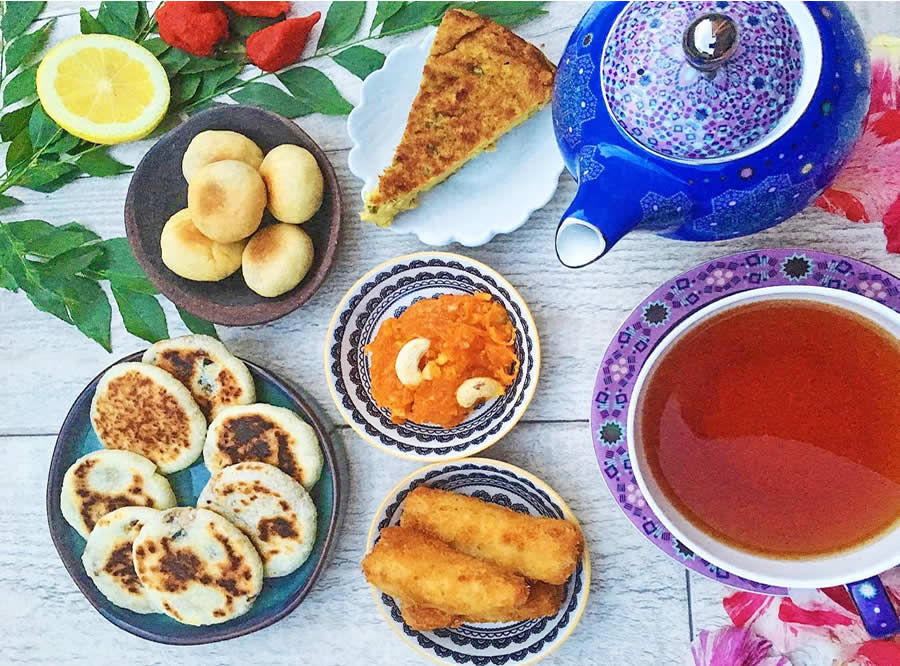
Knowledge of Maldivian food entails knowing the Sai Hotaa which is the local tea shop. They are tiny and unsophisticated areas in the neighborhood, which are the social hub of Maldivian communities. It is here that the locals get to see each other after prayer time, where the news are shared, friendship is served and here the best food is consumed. Even when you are on a vacation in a resort, and have not once set foot out of a Sai Hotaa, then you have not had one of the most authentic Maldives experiences.
The everyday routine of a Sai Hotaa is based on tea and Hedhikaa. The regulars come in the morning to have a Mas Huni with Roshi and a cup of hot tea and go to work. The crowd gathers once more in the afternoon, about 4:00 PM, in time to take part in Haveeru Sai, or the traditional after-Asr tea time, when fresh Hedhikaa is served into the kitchen and people sit down to be interviewed. There are numerous stores that remain operational even in the late evening hours, which also make them friendly to the late-evening shoppers.
What to Order at a Sai Hotaa
The two types of tea that you will more frequently encounter are Kalhu Sai (black tea with no additions, normally sweet) and Kiru Sai (sweet milk tea). They are both served hot and are a natural match to whatever is available at Hedhikaa that day. You will not have to order off the menu. In the majority of Hotaa, one only needs to walk to the stand area, look at what is on the tray, point to what he wants and pay a very small fee. The entire experience is informal, warm and truly local.
As main meals, most Sai Hotaa also do serve Mas Huni with Roshi in the mornings and Garudhiya with rice in the meal times. Others will also offer Mas Riha (curry tuna combining coconut milk) or Kulhimas (spicy tuna curry) on their menu subject to a specific day.
The ambience in a Sai Hotaa is such that no restaurant in the resort can imitate. The furnishings are plain, the scenery is mundane, and even the people talking to you are completely speaking Dhiveki. However, the food is actually good, the reception is authentic and the memory of sitting in one of the local tea shops and sipping Kiru Sai and a plate of fresh Gulha, is one of those traveling moments that you will remember after the journey.
💡 Traveller’s Tip: To have the most authentic tea-shop experience, at least one meal at the resort can be skipped and instead you might take a stroll into a nearby Hotaa in Malé or any other local island that you may have to stay. The food is a lot cheaper than you spend in the resort and the experience is much more authentic.
6. Fresh Seafood in the Maldives: Where to Find the Best Local Fish

Maldives is a Maldivian archipelago located at the center of the Indian Ocean. Even nearly everything concerning the local food culture derives out of that fact. The tuna served in Mas Huni, Garudhiya, and Rihaakuru are directly harvested in the adjacent waters and usually served the same day that they have been harvested. Local food in the Maldives is some of the freshest, fresher than seafood in the rest of the world.
Other local preparations are available in addition to the traditional tuna-based food. Locally prepared grilled fish is called Fihunu Mas; typically tuna or reef fish cooked on open fire. The marinade is normally a mixture of local spices and the outcome is smoky, spicy and beautifully charred at the borders. Kulhimas is spicy tuna curry flavored with Maldivian spices which is richer and more heavily flavored than Garudhiya and served with rice or Roshi. Mas Riha tuna fish curry is prepared with coconut milk and several different spices and has a creamy and slightly sweet taste that is more palatable to the guest with a high sensitivity to hot dishes.
Where to Find the Freshest Seafood
To have the freshest possible fish, no better plan that can be taken than to go to where the fishermen themselves take the fish. The most natural one is the Malale Fish Market within Malale: every day fishing boats arrive and unload right into the market and you may even see and purchase the daily catch there. A large number of locals purchase fish here and go to the local cafes to get it cooked.
Fish Island Restaurant and Mr. Octopus are also reputable among the tourists in the Island of Maafushi on fresh sea food platters. The Manhattan fish market and a number of restaurants bordering the sea in Hulhumalé offer good quality seafood. Being higher priced experience, the Ministry of Crab at Crossroads is rated as one of the best locations in Maldives to have quality crab and prawns.
The universal motto is the following: dine where the natives dine. Local restaurants and neighborhood cafes virtually always offer fresher and tastier seafood than anything found at the resort buffets, and at half the cost.
Your Quick Reference: What to Eat First in the Maldives
In case you are in a hurry or are overwhelmed by the choice, then this is a priority list of what you should do on your first visit to local Maldivian food.
Begin with Mas Huni with Roshi which is the traditional composition of tuna and coconut flatbread that must be first tried by every visitor. Eat it with Garudkiya at lunch time or dinner, the clearest tuna soup which is the most common dish in the cuisine. During the afternoon, around 4:00 PM visit one of the local Hotaa to have Gulha and Bajiyaa with a cup of Kiru Sai. Somewhere on your journey, you will have to eat Rihaakuru with rice or Roshi in a small portion so that you can get an idea of what centuries of cooking on the island is like. And dinner, demand Fihunu Mas the spicy grilled native fish that demonstrates the effectiveness of Maldivian spices with fresh fish.
FAQ
Mas Huni is generally regarded as the most iconic local Maldivian cuisine particularly among the tourists. It consists of tuna, bristled coconut, onion, green chili, and lime mixed together, with Roshi flatbread. It is the Maldivian traditional breakfast and the most appropriate place to start in case you are exploring the local food.
Garudhiya is a traditional Maldivian fish soup prepared by boiling fresh tuna in a little salty water until a clear and clean soup is obtained. It is among the best Maldivian staple food and it is normally served over a plate of steaming rice with lime, raw onion and green chili as the side.
Hedhikaa are customary Maldivian bite-sized savoury and sweet snacks which are offered in the local tea shops on the afternoon tea time, usually around the time between 3.00 PM and 5.00 PM. Famous types of it are Gulha (tuna balls fried), Bajiyaa (crispy pastry filled with fish), Masroshi (tuna stuffed flatbread), and Kulhi Boakibaa (spiced fish cake).
The Rihaakuru is very salty, very umami and a bit acidic. It can be likened to Marmite or highly intense anchovy paste. It is prepared through slow cooking of tuna in salted water until a thick dark paste is left. It is served alongside rice, Roshi or fried with onions and curry leaves by the locals. The first timers are recommended to start with a very small amount with rice or flatbread.
Local Maldivian food is available in most of the neighborhood tea shops (Hotaa), and local restaurants in Malé, Hulhumalé and guesthouse islands such as Maafushi, Thulusdhoo and Himmafushi. The Malé Fish Market is the ideal place where one could enjoy freshness of local seafood. You should not go to avoid restaurants when you feel like eating the real local food because they hardly have the same food.
Final Thoughts: Why Local Maldivian Food Deserves More Attention
The Maldives boasts of the crystal clear water, the bungalows that are located on water, and the amazing marine life. Its cuisine rarely features in the world news. It is a real loss, since Maldivian local cuisine is one of the most sincere and tasting traditions of food on the island in the world.
The story behind each of the dishes in this list is the same: the people of the islands that are located in the middle of the ocean, and who make incredible use of the two most common ingredients surrounding them fresh tuna and fresh coconut. What this has produced is a light yet rewarding, non-complicated yet multi-layered, cuisine that is inextricably linked to the daily rhythm of the island life.
Mas Huni for breakfast. Garudhiya on rice lunch. Kiru Sai with Gulha and Bajiyaa in the afternoon in a nearby Hotaa. A little Rihaakuru spoonful to get a feel of what centuries of island cooking may be like. These are the experiences that cost little and provide one with the colossal returns.
When you are next in the Maldives make sure that you go outside the resort at least once. Locate a nearby tea store, sit up and ask the people around you what they are consuming. It will be among the best choices you will do during the trip.
Have you sampled any of these local Maldivian food? What do you consider the most surprising one? Add your experience below and in case this guide proved to be useful to you, feel free to share it with another person intending to visit the Maldives.
See More
- Best Area to Stay in the Maldives: A Complete Atoll-by-Atoll Guide
- Best Luxury Resorts in Gaafu Dhaalu Atoll 2026: Prices, Villas & Southern Maldives Guide
- Maldives Airport Guide 2026: Everything You Need to Know About Velana International Airport (Arrival, Departure, SIM, Lounge & Tips)
- Best Five Star Luxury Resorts in Laamu Atoll Maldives: Prices, Features and Why to Stay
- Maldives Travel Guide 2026: 10 Things Every Traveller Must Know Before Visiting